

A missed delivery is often preventable before a vehicle is dispatched. Knowing how to avoid missed freight deliveries starts with accurate shipment details, a clear receiving plan and goods ready for collection. Agree the delivery window, access requirements and responsibilities in advance so teams can spot problems early and adjust the plan.
A missed pickup or late arrival can disrupt schedules, stock availability and customer commitments. This article explains which details help freight move smoothly, how to align receiving and transport plans, and why clear updates matter when timings change. It also covers when a logistics provider can help coordinate transport and reduce avoidable gaps between collection and delivery.
Key Takeaways
- Align delivery windows, receiving arrangements and shipment details in advance so everyone knows what is arriving and when.
- Accurate bills of lading help prevent avoidable problems with collection, transport and delivery.
- Coordinated planning across collection, transport and customs can help identify delays early and keep freight moving.
- An experienced logistics provider can bring haulage and transport management together when delivery schedules are difficult to coordinate.
1. Planning receiving around accurate shipment information
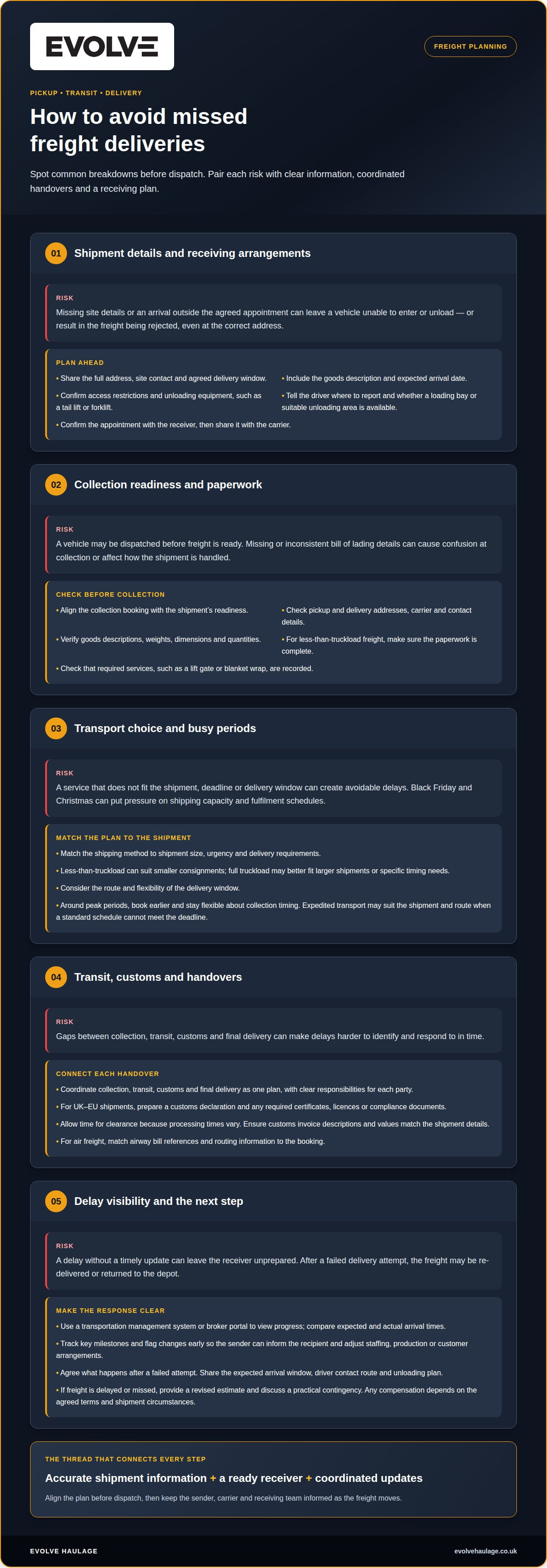
Start with a written delivery plan tailored to the receiving site. Give the carrier the full address, site contact, agreed delivery window, goods description and expected arrival date. Include access restrictions and any unloading equipment needed, such as a tail lift or forklift. Tell the driver where to report and whether a loading bay or suitable unloading area is available. Missing details can leave a vehicle unable to enter, unload or reach the right contact.
Confirm the appointment window with the receiver and share it with the carrier. Freight may be rejected if a vehicle arrives outside the agreed appointment, even at the correct address. A logistics provider can align the booking with site opening hours, receiving staff and unloading arrangements, then pass on changes promptly so the warehouse can prepare.
Before dispatch, check the carrier and shipment details against the booking: carrier identity, consignment reference, pickup date, addresses, goods description and delivery window. Consistent information helps prevent mix-ups between shipments or a driver attending the wrong site. The receiver should also know what is arriving, who is transporting it and how to report an issue.
Shipment visibility helps teams act sooner when delays emerge. A transportation management system or broker portal can show progress, while a provider can compare expected and actual arrival times. Reviewing on-time performance and recurring route issues can reveal risks. For example, repeated delays on one route may call for an earlier collection or a revised receiving plan for the next shipment.
After a failed delivery attempt, the next step depends on the carrier’s service arrangements. The carrier records the attempt, and the freight may be re-delivered or returned to the depot. The sender and receiver need clear instructions on what happens next. A provider can share the expected arrival window, driver contact route and unloading plan in advance, helping ensure the premises and receiving team are ready.
2. Why Are Freight Pickups Missed?
A pickup can fail before the vehicle arrives if the freight is not ready. Poor coordination between warehouse, scheduling and transport teams can leave goods unpicked, loading delayed or collection details unclear. Align the collection booking with the shipment’s readiness so a driver is not dispatched against an incomplete plan.
Before collection, check the bill of lading against the booking. It should show accurate pickup and delivery addresses, carrier and contact details, goods descriptions, weights, dimensions and quantities. For less-than-truckload freight, make sure the shipment paperwork is complete. Check that any required services, such as a lift gate or blanket wrap, appear in the paperwork. Incorrect or missing details can cause confusion at collection or affect how the freight is handled.
The shipping method matters too. Match the shipment’s size, urgency and delivery requirements to a suitable service. Less-than-truckload transport can suit smaller consignments, while a full truckload may be a better fit for larger shipments or specific timing needs. The route and flexibility of the delivery window also matter. Choosing a method that fits the deadline helps reduce avoidable delays.
Holiday periods, including Black Friday and Christmas, can increase shipping volumes and put pressure on available capacity. Book earlier and stay flexible about collection timing. If a standard schedule cannot meet the deadline, an expedited option may be suitable depending on the shipment and route.
A shipping and logistics service can bring document checks, method selection and booking coordination into one process. For example, a consultancy service can help identify where incorrect shipment details or unsuitable transport choices are contributing to missed pickups. Freight planning consultancy can support businesses looking to improve these arrangements.
3. How to Avoid Late Deliveries?
Preventing late freight starts with connecting collection, transit, customs and final delivery in one plan. A practical way to understand how to avoid missed freight deliveries is to coordinate each handover with the next party’s requirements. The shipper provides accurate shipment information, and the recipient sets out access and receiving arrangements. A logistics provider can track milestones and flag changes early, giving teams time to respond.
For UK-EU shipments, a customs declaration is required, and the goods may need additional certificates, licences or compliance documents. Allow time for clearance because processing times vary, then coordinate onward transport and the delivery slot. Customs invoice descriptions and values should match the shipment details. For air freight, matching airway bill references and routing information to the booking helps teams identify consignments during handovers.
Black Friday and Christmas can increase pressure on shipping capacity and fulfilment schedules. A provider can arrange bookings in advance, include buffer time and track key milestones from collection. If an update signals a delay, the sender can inform the recipient and adjust staffing, production or customer arrangements before the planned arrival.
Late deliveries can disrupt customer plans and undermine confidence, especially when a promised date passes without an update. Share a revised estimate and discuss a practical contingency with the customer. Compensation depends on the agreed terms and shipment circumstances, so explain any applicable remedy clearly rather than promising automatic payment.
For businesses considering how to avoid missed freight deliveries, a provider can coordinate bookings, carrier handovers, customs information and receiving arrangements. If freight is delayed or missed, the provider can share status updates and help arrange a revised delivery. Clear responsibilities and timely communication keep the sender and recipient informed as the shipment moves towards its destination.
4. Working with an experienced third-party logistics provider
A third-party logistics provider can connect order schedules, inventory readiness and carrier capacity in one transport plan. This helps prevent collection being booked before goods are ready or receiving teams can accept them. If stock is delayed, for example, the provider can adjust the collection plan and notify the relevant parties before the original slot is missed.
A provider’s processes matter most when a shipment deviates from plan. Agree how missed pickups are handled: does the carrier move collection to the next business day, or does someone need to arrange a new booking? Clear escalation steps help staff respond quickly instead of leaving freight waiting without an owner. The plan should also state who updates the recipient and revises the delivery appointment.
Before assigning a shipment, match the service to its urgency, size and delivery requirements. Select a carrier for a service suited to the job, with attention to safety records and on-time performance. Reviewing performance across routes can show whether a particular lane repeatedly disrupts orders. Use that information to make practical changes, such as adjusting the booking or choosing a service better suited to the deadline.
Peak seasons put extra pressure on capacity and fulfilment. Work with a provider in advance to align forecast orders, inventory availability, collection dates and receiving arrangements. Early planning gives teams more room to adapt when demand rises or stock is not ready. Automated dispatch and proactive alerts can also flag changes sooner, allowing transport teams to respond before a delay becomes a failed delivery.
The clearest takeaway is to treat the provider as part of the planning process, not only as a carrier booking contact. Agree responsibilities, escalation routes, status updates and how performance will be reviewed. If missed pickups are disrupting orders, discuss a coordinated freight plan to improve how collections and deliveries are managed.
Evolve Haulage
Evolve Haulage helps businesses coordinate freight planning when missed pickups or late arrivals threaten schedules. Its transport management and haulage services connect shipment details, collection arrangements and delivery requirements, helping businesses bring these moving parts into a clearer plan.
Turn to Evolve Haulage when transport needs closer coordination or time-critical freight requires a same-day delivery solution. Its consultancy service can help businesses review planning processes and identify where handovers, scheduling or shipment information may be contributing to disruption. The right support depends on the freight task and its delivery requirements.
Share the shipment details, collection and delivery locations, timing requirements and any receiving arrangements. Evolve Haulage can use this information to understand the transport task and discuss an appropriate approach. Contact Evolve Haulage to discuss your freight delivery needs.
Make your next freight plan more resilient
Use your next shipment to strengthen the process, not just meet the immediate deadline. Record where handovers, unclear responsibilities or limited updates create uncertainty, then use those observations to refine future transport plans. This gives teams a practical basis for improving coordination as order patterns and delivery requirements change.
A consistent approach to how to avoid missed freight deliveries also connects transport decisions to wider business priorities. Consider how collection timing affects production, stock availability and customer commitments, then align the freight plan with those needs. If schedules are difficult to manage internally, a logistics partner can help bring transport arrangements into a clearer, more coordinated process.
For support with your freight requirements, contact Evolve Haulage. A considered conversation can help you identify the transport approach that fits your shipments and operational needs. With clearer planning in place, your team can move forward with greater control over each delivery.
Frequently Asked Questions
How to Avoid Late Deliveries?
Plan collection and transit around the delivery deadline, allowing time for disruptions such as traffic or weather. If picking and packing could run behind schedule, for example, build preparation time into the booking instead of arranging collection for the earliest possible moment. During peak periods, book ahead and keep the schedule flexible. If a delay develops, tell the recipient promptly so they can adjust receiving arrangements.
Why Are Freight Pickups Missed?
Pickups are often missed because freight is not ready, collection details are wrong or teams have not coordinated loading. A driver may arrive while goods are still being picked or find the collection point inaccessible. Less-than-truckload transport can also be unsuitable for a tight delivery window. Match the service to the deadline and confirm that freight is ready before dispatch to prevent avoidable collection failures.
What information does a UK freight carrier need confirmed before dispatch?
A carrier needs accurate collection and delivery addresses, contact details, goods descriptions, weights, dimensions and quantities. The booking should also state the collection date, delivery window and any required handling equipment or services. For less-than-truckload freight, include the freight class on the bill of lading. An incorrect delivery address or omitted lift-gate requirement, for instance, can cause problems when the driver reaches the site.
How do delivery time slots and appointment booking work for freight deliveries in the UK?
The sender, carrier and receiving site should agree a delivery window, then record and share it with everyone involved. The window should fit the site’s opening hours, unloading arrangements and staff availability. A delivery outside an appointment may be refused, so pass on changes promptly. If the recipient cannot accept freight in the afternoon, for example, book an agreed alternative slot.
How can a logistics provider track freight shipments and provide delay alerts?
A logistics provider can use transportation management system visibility or a broker portal to monitor progress against planned milestones. If tracking indicates a delay, proactive updates give the sender time to inform the recipient and revise receiving arrangements. Reviewing on-time performance and recurring route issues can also help identify at-risk shipments earlier. The value lies in acting on status information, not simply recording it.
What are the costs of failed or re-delivery attempts by UK freight carriers?
A re-delivery can add fuel, driver time and carrier costs. A failed delivery may also result in the freight being returned to the depot.


