

A same-day label doesn’t, by itself, tell you whether a delivery is insured. A haulage service for urgent deadlines needs to be judged by more than speed: the collection plan, transport arrangement and cover for the goods all matter.
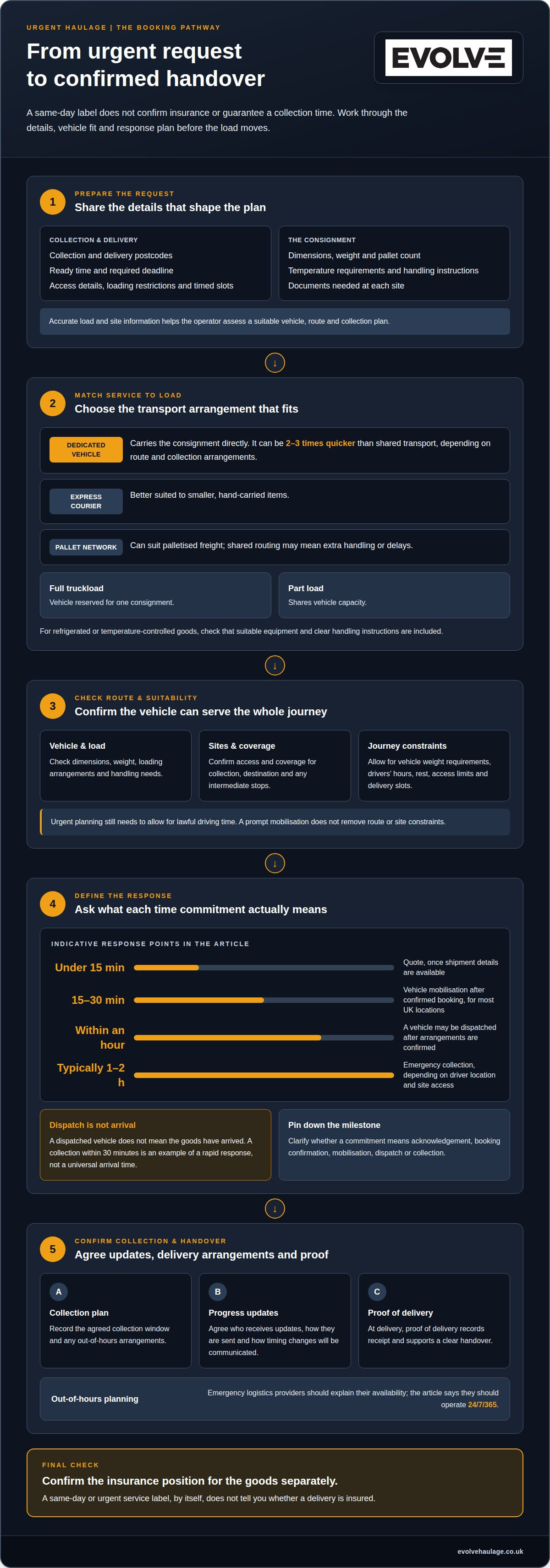
It’s reasonable to expect an urgent booking to move faster than a standard delivery, but same-day and next-day options work differently, and dedicated transport can be 2-3 times quicker than shared transport. The key is matching the service to the deadline and consignment, rather than relying on the label alone.
This guide explains how urgent haulage compares with standard same-day delivery, which details affect collection timing and what to establish about insurance. It also covers out-of-hours collections, helping you choose a practical option for your delivery.
Key Takeaways
- Match dedicated or shared transport to the consignment and deadline, and understand what makes urgent logistics different from standard same-day delivery.
- Assess how a provider’s vehicle options, coverage and response arrangements fit the collection and destination.
- Plan around collection availability, including out-of-hours requirements, to avoid delays when timing is critical.
- Clarify the insurance position for your goods and compare same-day with next-day haulage before choosing a delivery plan.
Emergency logistics compared with standard same-day delivery
Emergency transport prioritises a direct response and collection plan; standard same-day delivery may involve shared routes. A dedicated vehicle can be 2-3 times quicker than shared transport, depending on the route and collection arrangements.
Urgent delivery options
Urgent haulage in the UK can use dedicated vehicles, express couriers or pallet-network services. A dedicated vehicle carries the consignment directly, while an express courier is better suited to smaller, hand-carried items. Pallet networks can work for palletised freight, but shared routing may mean extra handling or delays.
Choose a service based on load size, access and deadline. A full truckload reserves the vehicle for one consignment; a part load shares capacity. Refrigerated or temperature-controlled goods need suitable equipment and clear handling instructions to maintain the required conditions.
Booking and delivery process
To request a useful quote, provide the collection and delivery postcodes, ready times, dimensions, weight, pallet count and any loading restrictions. Include the deadline, temperature requirements and documents needed at each site. These details help plan a suitable vehicle and route before booking.
Once the booking is agreed, the transport plan should set out collection, delivery and update arrangements. Confirm who will receive progress updates and how they should be sent. At delivery, proof of delivery records receipt and supports a clear handover between sender and recipient.
Rules and delivery restrictions
Vehicle weight affects which vehicle can carry the load and which operating requirements apply. Drivers’ hours and rest requirements also shape route planning. An urgent schedule must allow for lawful driving time, not assume one uninterrupted journey.
Access limits, timed delivery slots and site restrictions can affect arrival plans. Share vehicle access details, opening arrangements and required documents when booking, so the planned vehicle and delivery time suit the destination. Applicable requirements depend on the vehicle and journey.
Urgent haulage costs
The quote depends on the consignment. Route distance, vehicle type, load size, collection timing and temperature-control requirements all affect the price.
Out-of-hours collection, loading requirements and delivery timing may also affect the quote. Ask for transport and any out-of-hours element to be itemised, so the total reflects the planned service. There is no fixed UK-wide charge for every urgent consignment.
Assessing a provider’s courier fleet, coverage and response guarantees for urgent haulage
A late collection can disrupt production, cause a missed delivery slot or leave a customer waiting. Before arranging urgent transport, assess vehicle suitability, UK-wide route coverage and what each response commitment actually measures.
These factors need to work together: a fast booking response is useful only if the right vehicle can reach the collection point and serve the destination.
Fleet and response commitments
Check that the courier fleet can carry the load and access both sites. Dimensions, weight, loading arrangements and handling requirements all influence vehicle suitability. Professional emergency logistics providers can mobilise vehicles within 15-30 minutes of a confirmed booking for most UK locations. A vehicle may be dispatched within an hour after arrangements are confirmed, but dispatch does not mean the goods have arrived.
Clarify whether a response commitment means acknowledgement, booking confirmation, mobilisation or collection. Record the agreed collection window and update arrangements against the delivery deadline. For example, a confirmed dispatch time distinguishes a vehicle allocation from an estimated arrival.
UK-wide coverage
For a UK-wide journey, confirm coverage for both collection and destination, including any intermediate stops. A city-centre site may need different access planning from a roadside business address, so share the full route and site details.
Provide every postcode, access instruction and required arrival time when arranging the movement. This helps the logistics team assess the route and identify practical constraints at each stop. Confirm coverage for the complete journey, not just the initial collection leg.
Reducing delay risks
Reduce avoidable delays by providing accurate load dimensions, weight, readiness time and access restrictions when booking. For example, a vehicle that cannot reach a restricted loading area can delay collection, even after prompt mobilisation.
Agree who receives updates and how changes to collection timing will be communicated. A haulage and transport planning discussion can help align vehicle choice, route coverage and timing with the consignment’s deadline.
Round-the-clock availability and out-of-hours collections
For an urgent shipment, a rapid quote matters only if a suitable vehicle and collection arrangements can be put in place. A clear plan connects the quote, mobilisation, collection and delivery.
Collection confirmation and planning
Some emergency logistics providers can quote in under 15 minutes, once they have the shipment details. Give the collection and delivery postcodes, load dimensions, weight, readiness time and any access requirements. These details help the operator identify a suitable vehicle and assess the route.
Confirm whether the response time means a quote, booking confirmation, vehicle dispatch or collection. Emergency collections typically take 1-2 hours, depending on driver location and collection-point access. A collection within 30 minutes is an example of a rapid response, not a universal arrival time.
Out-of-hours collections
A provider handling urgent work should be able to explain its availability outside standard office hours. Emergency logistics providers should operate 24/7/365, so a shipment arising overnight or at a weekend can be planned without waiting for the next working day.
Ask how vehicle availability, collection timing and delivery updates are coordinated for your scheduled movement. A 24/7 service is useful only when the collection point can release the goods and the delivery site can receive them at the agreed time.
Airport cargo terminals need specific collection planning. Do not assume a vehicle has airside access: terminal arrangements affect where freight can be collected. Share cargo release details and collection instructions early so the transport plan accounts for the terminal process.
For time-critical freight, confirm the collection point, contact person and delivery handover before dispatch. This gives the operator practical information to coordinate the shipment and communicate changes. Clear arrangements matter overnight as much as during a scheduled daytime collection.
Same-day and next-day urgent haulage
Choose same-day transport when the consignment needs to move and arrive on the same day. Next-day haulage allows more time to coordinate collection, vehicle availability and delivery arrangements. A haulage service for urgent deadlines should suit both the goods and the time available.
In the UK, dedicated road-haulage operators and time-critical courier services offer urgent same-day and next-day delivery. The right option depends on the freight, collection point, destination and required arrival time.
For same-day transport, the operator needs to assess when the goods will be ready, the route and the receiving site’s opening arrangements. For example, a pallet ready for collection early may allow more time to plan delivery than freight released later. Share the deadline and access details together.
Next-day delivery can suit a consignment that needs urgent transport but cannot be collected or delivered the same day. Agree what “next day” means for the booking, including collection time, delivery window and site restrictions. A defined plan helps drivers and recipients prepare for the handover.
Production-critical freight may need a dedicated vehicle for direct transport, while a smaller consignment may suit an express courier. When choosing a haulage service for urgent deadlines, consider load size, handling requirements and the consequences of missing the deadline. The vehicle and route must also suit the collection and delivery locations.
Before booking, provide accurate dimensions, weight, ready time, postcodes and contact details. Confirm the delivery window and how updates will be shared. These steps help the transport operator plan around the actual consignment, not an assumed collection or arrival time.
Delivery speed alone does not establish whether goods are insured. Before confirming the booking, establish what cover applies to the freight and which terms govern the movement. Keep the relevant consignment and delivery documents available for the handover.
For a time-critical movement, discuss a same-day or next-day delivery plan that fits your freight and deadline.
Evolve Haulage
Evolve Haulage helps businesses organise time-critical UK deliveries through haulage, transport management and consultancy. Its 24/7 and same-day delivery solutions support urgent movements when a missed deadline could disrupt production, supply or a customer commitment.
For a same-day or next-day shipment, provide the collection and delivery details, consignment information and required timing. Include handling needs and the insurance questions you need addressed, so the delivery plan reflects the freight and its requirements.
If urgent transport is part of a wider logistics challenge, transport management or consultancy can help address the operational planning behind it. Contact Evolve Haulage to discuss your delivery requirements.
Set your urgent delivery plan in motion
Before arranging transport, define what success means for the consignment. Set the latest acceptable arrival time, identify who is authorised to receive the goods and decide how your team will respond if plans change. This gives everyone a clear operational reference point.
For a haulage service for urgent deadlines, share these requirements alongside the load details and ask for the agreed delivery plan in writing. Include the insurance position and any conditions relevant to the goods, so speed is not the only factor in your decision. A clear record supports a smoother handover and helps your team manage expectations.
Evolve Haulage can discuss the requirements behind your urgent delivery and help you consider the right transport approach. Bring the collection and destination details, consignment needs and deadline to the conversation. Contact Evolve Haulage about urgent delivery to discuss your requirements and take the next step with clarity.
Frequently Asked Questions
Is my delivery insured?
The insurance that applies depends on the terms agreed for the specific movement. Same-day or next-day service does not, by itself, define the cover. Before dispatch, establish the applicable limits, exclusions and claims process, and provide an accurate description and value for the goods. For fragile or specialist freight, clarify how its handling requirements relate to the policy terms. Keep the agreed cover details with the consignment records.
What Defines Emergency Logistics?
Emergency logistics means arranging transport to meet an immediate operational need rather than moving freight on a routine schedule. A machine component needed to restart production is one example; urgent replacement stock after a missed delivery is another. The response involves assessing the consignment, collection point, destination and deadline, then matching them to an appropriate transport plan.
What areas do you cover?
Evolve Haulage provides road freight services across the United Kingdom. For a movement involving multiple collection or delivery points, share every postcode and stop when discussing the consignment. This helps establish the route and sequence, particularly when recipients have different opening arrangements. Provide the full journey details so the intended coverage is clear from the outset.
What types of goods can you transport?
Evolve Haulage transports commercial road freight, including dedicated full and partial loads. The right arrangement depends on the consignment’s dimensions, weight, handling needs and collection and delivery access. A palletised load and an irregularly shaped item, for example, may need different loading arrangements. Describe the freight accurately, including any special handling or temperature requirements, so the transport plan suits the goods.
How quickly can urgent haulage be arranged and delivered?
Evolve Haulage can arrange urgent haulage for same-day delivery. Timing depends on the collection location, destination, goods readiness and route. A next-day movement may suit freight that cannot be prepared in time for same-day collection. Share the required arrival time and site receiving arrangements when discussing the shipment. The transport plan must account for both the journey and the time available for collection.
What information is needed to get an urgent haulage quote?
Provide the collection and delivery postcodes, goods description, dimensions, weight and pallet count, if applicable. Add the date and time the freight will be ready, the delivery deadline, site access details and any handling requirements. Mention whether documents or a named recipient are needed at handover. For example, a restricted loading bay can affect vehicle planning, so describe the access clearly.


