

The lowest quote isn’t always the best fit. Knowing how to choose a haulage company means checking whether it can handle your freight, meet your delivery windows, explain its quote and terms, and communicate reliably. If your load may be subcontracted, find out who will carry it and who will be your point of contact.
You should have a clear picture of how your goods will be moved, handled and kept on schedule. Share the details that shape the job, including load size and weight, delivery locations, frequency and any special handling needs. This helps establish whether the service suits your operation.
This guide explains how to assess freight requirements, delivery timing and handling, then compare quotes and written terms. It also covers signs of dependable service, so you can choose based on more than price alone.
Key Takeaways
- Match the service to your freight’s size, weight, handling needs and delivery window.
- Understand what a quote covers and make sure key service terms are clear in writing.
- Assess experience with similar cargo and how the operation manages delays or changing plans.
- Look beyond the lowest price to judge whether the company’s capability and communication suit your needs.
1. Understanding freight, delivery windows and handling requirements
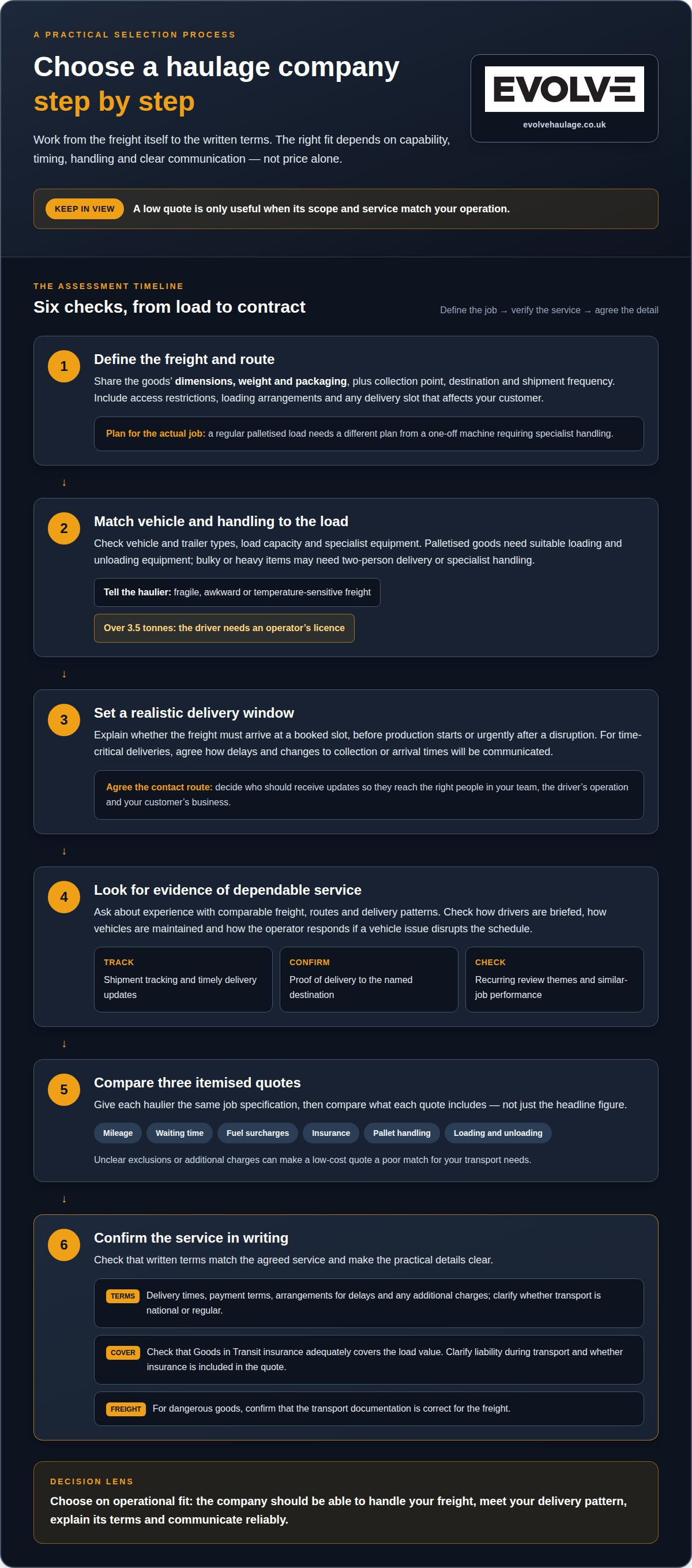
Start by defining the freight, route and purpose of the delivery. Give the haulier the goods’ dimensions, weight and packaging, along with the collection point, destination and shipment frequency. A regular palletised load, for example, needs a different plan from a one-off machine requiring specialist handling. Include access restrictions, loading arrangements and any delivery slot that affects your customer’s operation.
Match the vehicle and handling method to the load. Palletised goods need suitable equipment for safe loading and unloading; bulky or heavy items may require two-person delivery or specialist handling. Describe fragile, awkward or temperature-sensitive freight before the journey is planned. According to UK Government, a driver operating a vehicle over 3.5 tonnes needs an operator’s licence. Clarifying the load also helps establish responsibilities and potential liability if handling instructions are missed.
Set a realistic delivery window around your business schedule. Explain whether the goods must arrive at a booked slot, before production starts or urgently after a disruption. For time-critical deliveries, ask how the haulier will communicate delays and what happens if collection or arrival times change. Agree who should receive updates so messages reach the right people in your team, the driver’s operation and your customer’s business.
A haulage company should provide shipment tracking, timely delivery updates and proof of delivery, such as confirmation that the goods reached the named destination. Agree how updates will be shared and who to contact if plans change. To assess performance, read customer reviews for recurring comments about punctuality, communication and freight handling; compare these with evidence of delivery performance on similar routes or loads. Reliable haulage means the service fits your actual requirements, not simply the advertised delivery option.
2. Transparent, bespoke quotes and written service contracts
A useful quote starts with a consistent job specification covering the goods, route, frequency, and collection and delivery requirements. Ask for an itemised breakdown of mileage, waiting time, fuel surcharges, insurance, pallet handling, and loading or unloading. Gather three quotes and compare what each includes, rather than choosing solely by the lowest figure.
When comparing UK haulage quotes and contracts, look for clear delivery times, payment terms, arrangements for delays and any additional charges. Written terms should match the agreed service, including whether the transport is national or regular. Check that Goods in Transit insurance adequately covers the value of your loads. Clarify who is liable for the goods during transport and whether insurance is included in the quote.
Fleet suitability matters as much as the headline price. Ask about vehicle and trailer types, load capacity, specialist equipment and vehicle maintenance. Match these details to your freight: a palletised load needs suitable handling equipment, for example, while a bulky item may require a different vehicle. The right capacity and equipment help ensure the service delivered matches the one quoted.
A low-cost quote may leave exclusions or extra charges unclear, or describe a service that doesn’t suit your transport needs. Compare the itemised scope, insurance and written terms before deciding. For dangerous goods, confirm that the transport documentation is correct for the freight. Missing or incorrect paperwork can expose businesses to large fines.
Where ongoing logistics coordination is part of the challenge, transport management support can help align haulage services with day-to-day requirements.
3. Why is reliability so important in haulage?
A missed collection can disrupt production, while late freight may cause a customer to lose a sale. Each delivery connects suppliers, transport operators and the destination’s timetable, so reliability matters. Assess a haulier’s record against the work you need, not just a general claim of dependable service.
Look for experience with comparable freight, routes and delivery patterns. A company moving palletised stock regularly may not have the same expertise as one carrying machinery or other specialist cargo. Ask for references from businesses with similar requirements, then look for specific examples of meeting strict delivery slots, protecting goods and communicating when plans change.
Reviews can add context, but focus on repeated themes rather than a single comment. Consistent feedback about missed collections or unclear updates, for instance, may point to an operational weakness. A conversation with a reference can help you understand how the haulier handled a delayed delivery, a destination change or a query about liability.
A track record also reflects the people and vehicles behind the service. Ask how drivers are briefed on the load and route, and how the operator manages vehicle maintenance. For a long-distance delivery, a well-maintained vehicle and a clear escalation process matter because a breakdown can affect arrival times and plans further along the chain. Ask how the company responds if a vehicle issue disrupts the schedule.
Experience should be relevant, not measured only by time in business. A haulier familiar with your cargo can plan suitable handling and anticipate practical constraints at collection or delivery. Compare its examples with your requirements, including load characteristics, journey distance and the consequences of delay. Price matters, but the lowest quote alone cannot show whether the operator has the right expertise or a consistent delivery record.
4. Choosing a haulage company
Start with a shortlist based on operational fit, not a general promise of good service. To decide how to choose a haulage company, compare its ability to handle your freight, reach your destinations and manage your required delivery pattern. A business sending regular full loads has different needs from one arranging occasional smaller consignments. Check that its road haulage coverage suits your routes and its experience reflects the work involved.
Clarify who will physically carry each load. If a haulier may subcontract, establish how this affects communication and handling responsibilities, and who manages delivery. A named point of contact and clear arrangements for changes help prevent confusion between operators. Ask how shipment updates are shared and what happens if a vehicle problem disrupts the plan.
Assess the practical capability behind the proposal. The vehicle, load capacity and equipment should suit your freight, while maintained vehicles and a clear approach to compliance support efficient operations. If your cargo needs specialist handling, look for relevant experience rather than assuming every operator has the same expertise. A tipper or crane lorry, for example, is relevant only when the load and delivery site require that equipment.
When deciding how to choose a haulage company, consider reputation, route coverage, communication, handling, written terms and charges together. A low headline quote cannot show whether the logistics plan fits your operation. For regular shipments, consider whether a standing arrangement would support consistent planning. If your requirements are time-critical, assess whether the proposed service can meet that delivery need. To discuss your road haulage requirements, speak with the haulage team.
Evolve Haulage
Evolve Haulage can help businesses turn transport requirements into a practical haulage plan. Its haulage and transport management services support freight movements and day-to-day logistics, while consultancy can help address wider transport planning needs. For urgent requirements, 24/7 and same-day delivery solutions are also available across the UK.
Share the essentials of your operation, including freight type, delivery locations, schedule and handling requirements. This gives the team a clear basis for discussing an appropriate approach, whether you need a one-off movement or support with ongoing transport arrangements.
If you’re ready to discuss your requirements, contact Evolve Haulage.
Make your next transport decision with clarity
Choosing a haulage partner is also a chance to review how transport fits your wider operating plan. Give both sides a practical starting point: outline the outcome your business needs, explain how freight supports it, and describe what a successful working relationship should look like. This keeps the discussion focused on operational fit rather than assumptions.
Knowing how to choose a haulage company means matching its role to the support you need. Evolve Haulage provides haulage, transport management and consultancy, so businesses can discuss freight movements alongside broader logistics requirements. Whether you’re planning a new arrangement or refining existing transport processes, a focused discussion can help shape your next step. Identify which decisions need attention first and where a specialist partner could make coordination more straightforward.
Bring your priorities and upcoming transport requirements to the conversation. Contact Evolve Haulage to discuss how its services could support your operation. A well-defined next step can turn a transport need into a workable plan.
Frequently Asked Questions
Will your freight be subcontracted to other haulage companies in the UK?
Subcontracting depends on the transport arrangement and the capacity needed for a particular load. If another operator carries the freight, clear terms should identify the carrier, explain who manages updates and set out responsibility for delivery and handling. A single named contact, for example, can coordinate information between your business and the driver, reducing uncertainty if the schedule changes.
Why is reliability so important in haulage?
Reliable transport helps businesses plan stock, production and customer commitments around expected arrivals. If components are due before a production run, for example, a delay can affect several linked activities, not just one delivery. Assess reliability across the full service: collection, arrival, communication during disruption and resolution of delivery issues. This wider view shows whether the transport arrangement consistently supports your operation.
Can haulage companies handle bulky or heavy items?
Yes, some UK haulage providers can move bulky or heavy goods using two-person delivery or specialist handling. The suitable method depends on the item’s dimensions, weight and packaging, as well as access at collection and delivery. A large piece of machinery, for example, may need different handling from a palletised consignment. Share these details early to help match the freight with suitable equipment and delivery arrangements.
How do I choose a logistics company to work with?
Choose a logistics partner whose role fits the way your business moves goods. If you need coordination across day-to-day road transport, transport management may be relevant; if you’re reviewing internal logistics, consultancy can help assess processes and strategy. Define the business outcome first, such as improving schedule coordination or organising recurring freight movements, then match the service to that priority.
What are the associated fees?
Haulage pricing depends on the job, and you’ll need to request a quote. The amount can be affected by freight type, distance, service requirements, vehicle needs, fuel, insurance and additional work such as loading or unloading. Ask for an itemised quote to distinguish the core journey from extra services. This makes it easier to assess the overall transport arrangement against your requirements.
What services do UK haulage companies offer, and which type suits my freight?
Services can include pallet delivery, general haulage, dedicated full or partial loads, and urgent transport. Pallet delivery suits goods prepared on pallets, while general haulage can accommodate different freight requirements. A same-day service may suit time-sensitive consignments. Businesses needing broader operational coordination can also consider transport management or consultancy, depending on whether they need logistics oversight or advice on their transport setup.


