

Can you switch haulage provider before your current contract ends? It may be possible if your agreement allows it, but the termination terms, notice requirements and handover arrangements determine when the change can take effect. Review these early so you can plan a change without disrupting day-to-day transport.
Price matters, but the lowest quote is only useful if the provider can meet your operational and technical requirements. A sound comparison looks at recommendations and relevant experience, checks how a provider’s capabilities fit your systems and transport needs, and weighs competitive quotes for each event on a consistent basis.
This article explains how to assess recommendations, technical fit and event-specific haulage quotes. It also covers the contract and transition details to review before deciding, so you can balance reliable operations with value.
Key Takeaways
- Use relevant recommendations and case studies to assess whether a provider’s experience aligns with your transport requirements.
- Compare technical capabilities and integrations against your current systems to identify potential gaps before a transition.
- Request event-specific quotes using consistent requirements, so you can compare the full scope of each proposal.
- Set out routes, timings, loads and service expectations in your tender to help providers prepare clear, comparable responses.
1. Checking recommendations, testimonials and case studies
Set aside an hour to review recommendations, testimonials and case studies before shortlisting providers. Look for examples involving similar vehicle types, delivery patterns, freight and customer requirements. A case study about regular pallet deliveries may say little about a one-off event with a narrow delivery window. Check whether the example explains the challenge, the service provided and the outcome, rather than relying on broad claims.
Compare UK haulage providers by matching the same requirements across each proposal. Consider the full scope, including collection and delivery arrangements, communication, capacity and how exceptions are handled. Weigh the quote against relevant evidence, such as documented performance or a customer reference. The lowest figure alone does not establish best value.
For compliance, assess whether the provider’s operator licensing, insurance and relevant safety processes fit the vehicles and freight involved. Ask for evidence that relates to your proposed work, and consider how records are maintained; according to the Driver and Vehicle Standards Agency, Working Time Directive records require a two-year archive. Use a recommendation to understand how these processes work in practice.
For dangerous goods, waste or temperature-controlled freight, establish which requirements apply to the goods and journey, then assess whether the proposed arrangements address them. Include freight classification, handling conditions and relevant documentation in your comparison. These details can affect the vehicle, equipment and operating procedures required.
To avoid disruption during a provider change, agree the handover sequence, contacts, active bookings and any time-critical deliveries before the new arrangement starts. For example, map open consignments by collection date and destination, then assign responsibility for each. During the first 90 days, track agreed KPIs such as on-time delivery, exceptions and manual data entry; a 50% reduction in manual data entry time can be a possible target, depending on the baseline and process.
2. Comparing technical capabilities and integrations
Map the systems your operators use before comparing technical capabilities. List your transport management system, vehicle telematics, driver-hours tools and delivery-booking process. Then identify what information passes between them, such as job details, vehicle allocations, proof of delivery and exceptions. This shows whether a proposed setup can fit existing workflows or requires a separate process.
Ask how information will transfer and who will manage each handover. Trace a sample job from booking through allocation and delivery to reporting. Note any rekeying, duplicate records or manual updates to expose integration gaps before they affect dispatch or customer updates. Include equipment compatibility in your assessment, especially if new hardware is needed to support features such as live driver-hours information.
Transition work can create risks and costs that are easy to miss when switching haulage companies. System configuration, hardware replacement, data migration, staff training and temporary parallel processes may all require time or extra resources. Contract exit terms and open jobs can also shape the transition plan. Include these items in your comparison, without assuming every change will carry the same cost.
For a structured comparison, record the following for each proposal:
- System fit: which existing platforms and data flows can be used?
- Equipment: which vehicle devices need replacing or reconfiguring?
- Data: how will records transfer, and who owns each task?
- Support: who resolves failed integrations or missing job updates?
Before moving routine work, agree a controlled test using a representative delivery. Compare the system record with the actual collection, delivery and exception details. This gives operators a chance to spot mismatched fields and unclear responsibilities early, while there is still time to adjust the process.
3. Getting competitive quotes for each event
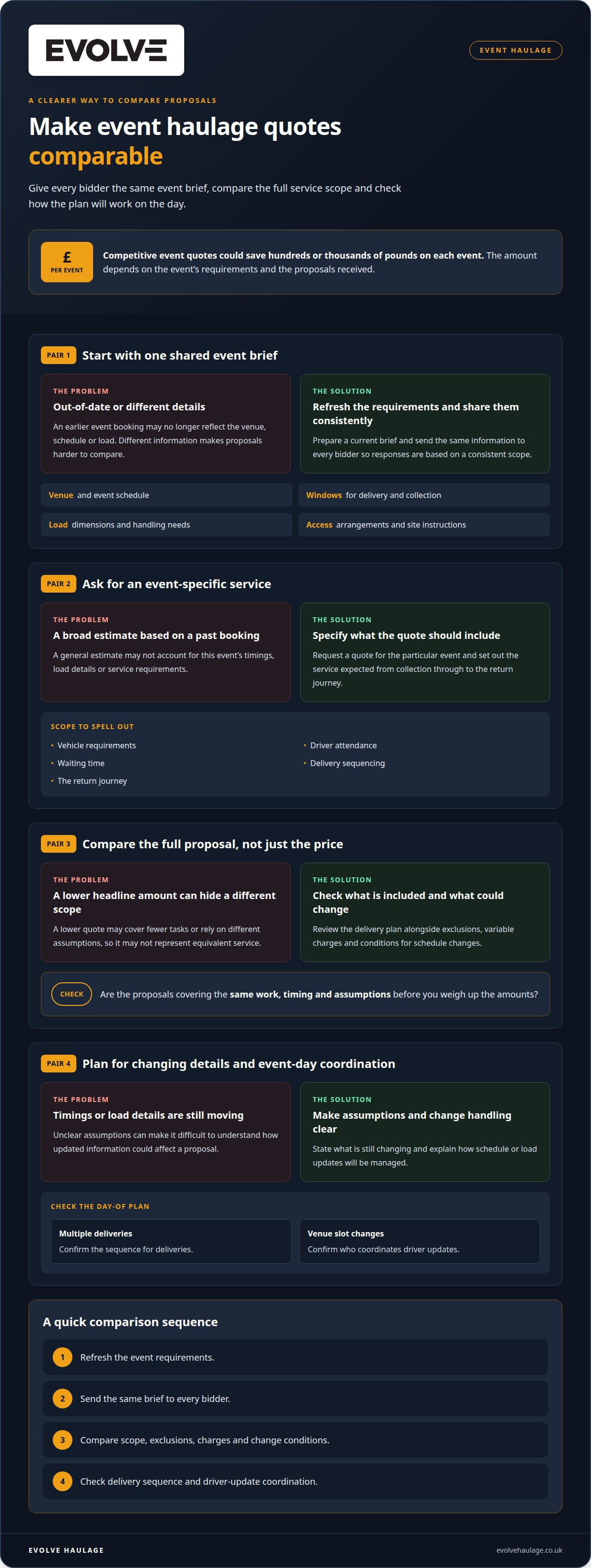
If you last requested transport quotes for an event a year or two ago, review its current requirements before seeking prices. Create a brief covering the venue, delivery and collection windows, load dimensions, access arrangements and event schedule. For example, a city-centre exhibition may need timed deliveries and a separate collection plan after closing. Share the same brief with every bidder so you can compare responses consistently.
Request a quote specific to the event, rather than a broad estimate based on a previous booking. State what the proposed service should include, such as vehicle requirements, driver attendance, waiting time, delivery sequencing and the return journey. If timings or load details are still changing, make your assumptions clear. This helps you compare like with like and see where updated information could affect the proposal.
Compare the full scope, not just the headline amount. Review any stated exclusions, variable charges and conditions for schedule changes alongside the delivery plan. Competitive event quotes could save hundreds or thousands of pounds on each event, but the amount depends on the event’s requirements and the proposals received. A lower quote may not represent equivalent service if it covers fewer tasks or uses different assumptions.
- Timing: record delivery slots, collection windows and deadlines.
- Load: describe the equipment, quantities and handling needs.
- Access: include venue restrictions, loading points and site instructions.
- Changes: explain how updates to schedules or loads will be managed.
Assess how the plan will work on the event day. For example, confirm the sequence for multiple deliveries and who will coordinate driver updates if a venue slot changes. Keep the final brief with each quote, then assess every proposal against the same requirements. This gives you a clear basis for choosing an arrangement and reviewing the result after the event.
Office administration teams spend hours each week chasing drivers for manual tachograph downloads. A goods vehicle operator must have an additional £800 available for each extra vehicle in the fleet.
4. What information should be included in a haulage provider tender?
A useful tender gives every bidder the same operational picture. Start with the goods, collection and delivery locations, expected frequency and seasonal changes. Distinguish routine pallet movements from irregular machinery loads, for example. Include site access details, delivery restrictions and the contacts responsible for dispatch, receiving and escalation. Clear inputs help providers shape proposals around the work rather than assumptions.
Describe the service standards your operation needs. Explain how bookings are placed, what updates your team expects, how proof of delivery is recorded and how exceptions are reported. Include any site-specific delivery sequence. Set out how performance will be reviewed, using measures such as delivery punctuality, damage reporting and response to issues. Define each measure so bidders interpret it consistently.
Cover practical and technical requirements that affect delivery. Specify relevant vehicle or equipment needs, load characteristics, handling instructions and freight-specific conditions. Identify the systems used for bookings, job updates and documents, then explain what information must pass between them. Ask each bidder to describe its proposed workflow, implementation responsibilities and dependencies on your existing systems.
- Scope: list locations, goods, service frequency and expected variations.
- Operations: explain booking, communication, delivery evidence and exception handling.
- Compliance: request details of relevant licences, insurance and operating procedures.
- Transition: identify current bookings, records, key dates and handover responsibilities.
- Response format: request costs by service component, assumptions, exclusions and review measures.
Finally, state how you will assess submissions. Give weight to service fit, operational resilience, technical compatibility and the clarity of each response, alongside price. Ask bidders to flag assumptions and describe how they would manage a sample scenario, such as a late site change or an urgent replacement collection. This makes proposals easier to compare and reveals how plans work in practice.
Preparing a tender for a provider change? Discuss your haulage requirements and the operational detail behind them.
Evolve Haulage
Evolve Haulage can help businesses assess transport requirements and plan a practical provider transition. Its haulage service supports organisations seeking a transport partner, whilst transport management helps keep day-to-day logistics operations coordinated. Consultancy can also support businesses reviewing their current arrangements, operational requirements and tender criteria. For time-critical needs, Evolve Haulage provides 24/7 and same-day delivery solutions across the UK. If you’re preparing to change providers, share your requirements and priorities to start a focused conversation about the right next steps. Contact Evolve Haulage to discuss your haulage needs.
Turn your provider decision into a clear next step
When switching a haulage provider, treat the decision as the start of a working relationship, not just a contract change. Agree how responsibilities will transfer, who owns each action and how updates will reach the people managing deliveries. A clear handover gives your team a practical reference as operations move to the new arrangement.
Use your priorities to guide the conversation with a prospective transport partner. Be clear about the outcomes your operation needs and the constraints that matter most. This helps you assess whether the proposed approach fits your business, rather than relying on tendering assumptions. Evolve Haulage can discuss your requirements and help you identify a suitable next step for your transport operations.
Contact Evolve Haulage today to discuss your requirements and move forward with confidence.
Frequently Asked Questions
Is it possible to switch providers whilst I am still under a contract?
A change may be possible, but your contract determines the available options. Review the termination, renewal, notice and early-exit clauses, and check whether the agreement covers all services or separate workstreams. You may, for example, have distinct terms for regular loads and occasional deliveries. Establish the contract end date and any obligations that continue during the handover before making a change.
What are the main risks of staying with an outdated fleet provider?
An outdated provider’s processes may no longer match your operational requirements. Limited system compatibility, for example, can force staff to re-enter booking details, while unclear vehicle or delivery updates can make planning harder. Review whether the provider’s operating model supports your shipment types, schedules and reporting needs. Look for a growing gap between the service you need and the processes in place.
How do I switch haulage provider in the UK?
To switch haulage provider, review your existing contract and identify the earliest practical changeover date. Define your transport requirements, assess suitable proposals and agree responsibilities with the incoming provider. Plan how to transfer open bookings, delivery instructions and operational contacts. Assign an owner to each shipment already in transit, for example, so both teams know who will handle updates and resolve issues during the transition.
What notice period is required to end a UK haulage contract?
There is no single notice period for every UK haulage contract. The required notice depends on the agreement, including its renewal, termination and service-specific clauses. Check how notice must be given, when the period starts and whether particular dates affect termination. Keep a record of the notice and agreed end date, then plan the replacement service around those terms.


