
The largest vehicle isn’t always the right choice for a delivery. A dedicated haulage service assigns a vehicle to your consignment, without combining it with other customers’ freight. For lighter domestic loads, a van may suit better than an HGV. Choose based on the goods’ weight, floor space, height and loading method.
Choosing the right transport means balancing delivery deadlines, site access and the space your load needs. This guide explains what haulage includes and when dedicated HGV, direct, contract or domestic van transport may suit your business. It also covers the practical details to share when matching a vehicle and service to your consignment.
Key Takeaways
- Match the vehicle to your load’s weight, dimensions and loading method, rather than relying on pallet count alone.
- Plan collection and delivery around access, goods-ready times and receiving hours to help keep a direct journey on track.
- For recurring transport needs, consider how a contract arrangement could align haulage planning with your regular operations.
- Use a dedicated van for suitable domestic loads when its capacity and journey plan fit the delivery requirements.
Why choose dedicated HGV transport?
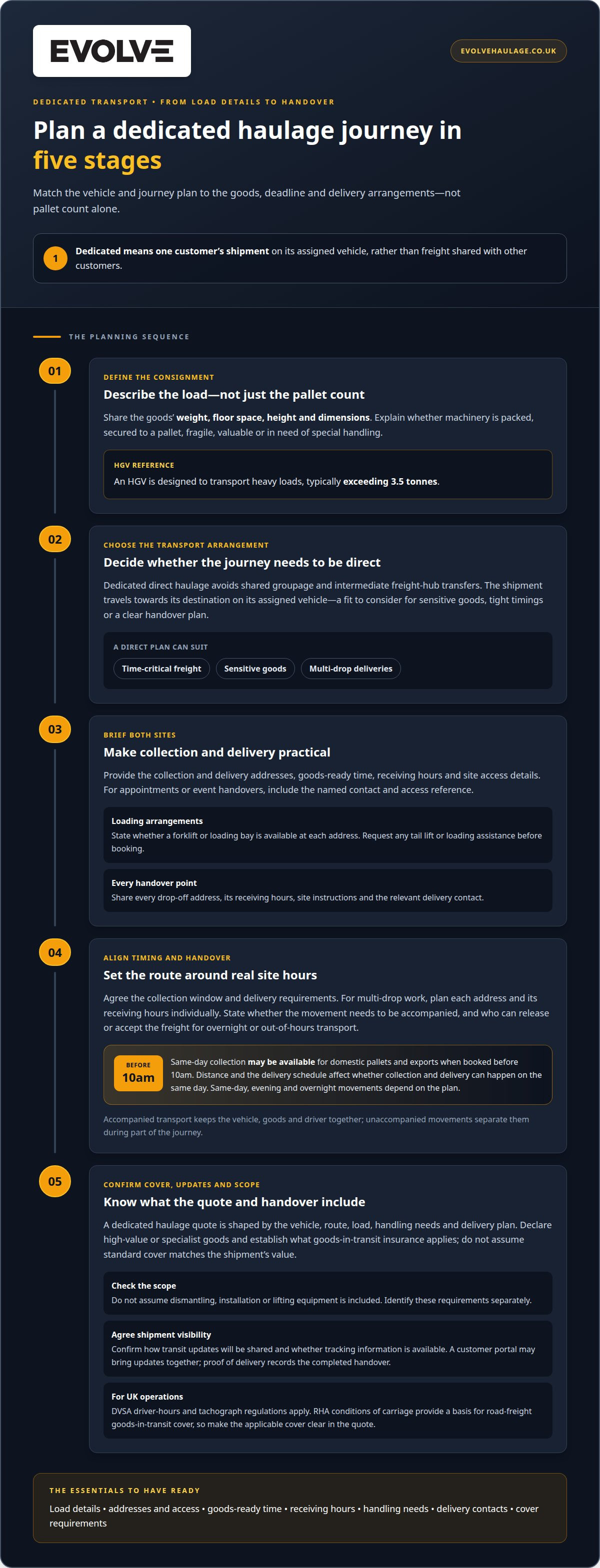
A dedicated HGV carries one customer’s shipment rather than combining it with other consignments. The page describes an HGV as a vehicle designed to transport heavy loads typically exceeding 3.5 tonnes. This can suit substantial freight or a time-critical delivery where a direct vehicle plan matters.
Choose a haulage company by matching its transport plan to your load, deadline and delivery arrangements. Explain, for example, whether machinery is packed, secured to a pallet or needs special handling. Provide the collection and delivery addresses, goods-ready time, receiving hours, and whether a forklift or loading bay is available at each site. These details inform the vehicle choice and route plan.
A booking should set out the collection window, delivery requirements and any site access details. For a warehouse appointment or event handover, include the named contact and access reference. Same-day collection may be available for domestic pallets and exports when booked before 10am. Distance and the delivery schedule affect whether collection and delivery can take place on the same day.
Dedicated transport can support time-critical freight and multi-drop deliveries. The route plan should account for each delivery address and its receiving hours, rather than treating several drops as one handover. During transit, shipment updates can help a business coordinate recipients. A customer portal may bring those updates together, while proof of delivery records the completed handover.
For UK operations, DVSA driver-hours and tachograph regulations apply. RHA conditions of carriage provide a basis for road-freight goods-in-transit cover, so the quote should make the applicable cover clear. A dedicated haulage quote is shaped by the vehicle, route, load, handling needs and delivery plan. Don’t assume it includes dismantling, installation or lifting equipment; identify those requirements separately.
- State whether a forklift or loading bay is available at each address.
- Request any tail lift or loading assistance before booking.
- Share access references, delivery contacts and every drop-off point.
Dedicated direct haulage without shared groupage or freight hub transfers
A dedicated direct movement keeps one customer’s freight on its assigned vehicle, without shared groupage or transfers through a freight hub. It can suit sensitive goods, tight timings or deliveries that need a clear handover plan.
Direct transport without shared transfers
With groupage, consignments from different customers share a vehicle; direct haulage avoids that shared journey. The shipment travels from collection towards its destination without an intermediate hub transfer. For example, a fragile machine travelling from a supplier to a warehouse can remain on the same vehicle throughout the planned journey.
Before booking, describe the goods’ value, fragility and handling needs. This gives the transport plan a clear basis and highlights where extra care matters. Declare high-value or specialist goods in advance, then establish what goods-in-transit insurance applies. Don’t assume standard cover matches the shipment’s value.
Vehicle accompaniment and transport timings
Accompanied transport keeps the vehicle, goods and driver together; unaccompanied movements separate them during part of the journey. State which arrangement the delivery requires, particularly if the goods need controlled handovers. For overnight or out-of-hours transport, specify who can release and accept the freight, and which entrance or loading point drivers should use.
Same-day, evening and overnight movements depend on the collection and delivery plan. Provide the goods-ready time, receiving hours and site access details when arranging transport. For deliveries across the UK, this helps align the journey with the people available to hand over the shipment. Agree how updates will be shared and whether tracking information is available for the movement.
For a direct movement, UK haulage planning can help align the route, handling requirements and handover arrangements with the shipment.
Contract haulage for ongoing business needs
For repeat movements, contract haulage can organise transport around recurring consignments, routes and deadlines. It provides a planned framework for regular deliveries, rather than requiring every shipment to be arranged as a separate urgent request.
Start by mapping your usual collection and delivery pattern. For example, a manufacturer might send palletised stock to the same distribution site, while a supplier makes regular deliveries to several customers. Note the goods, loading method, destination and expected timing for each movement. This helps shape a practical schedule and identify when specialist vehicles or handling arrangements are needed.
Regular demand doesn’t mean every load is identical. One week may involve a full load, while another consignment is smaller or needs express transport to meet a deadline. Set out how routine shipments differ from time-critical exceptions. The arrangement can then distinguish planned movements from urgent requests instead of treating every delivery as the same job.
A clear transport plan should define the information shared for each collection and delivery. Useful details include:
- Collection and delivery addresses, including any recurring site instructions.
- Consignment dimensions, pallet count and loading requirements.
- Receiving hours, named contacts and delivery deadlines.
- Changes to volume, routes or handling needs as operations develop.
Review the arrangement when your business changes suppliers, adds a delivery point or alters its product mix. A new machine part, for instance, may need different handling from the pallets normally dispatched. Share the change before the next collection so the vehicle and logistics plan match the actual freight.
Contract haulage is most useful when transport needs are predictable enough to plan but still require coordination as orders change. If movements are occasional, one-off transport may be simpler. For recurring consignments, a defined process can clarify responsibilities, shipment details and deadline planning across the supply chain.
Domestic dedicated van services
A dedicated van can suit a domestic load that needs its own vehicle but doesn’t fill an HGV. For UK same-day freight, a small van is generally more cost-effective than a 7.5-tonne or 18-tonne truck. The right vehicle depends on the load, not just how many pallets it contains.
Check four practical factors when planning a light haulage booking: total weight, floor space, height and loading method. A single bulky item may need more floor space than several compact pallets. A load handled from the kerb also has different requirements from one loaded by forklift at a warehouse.
For example, a business sending equipment between UK sites should provide both postcodes, the goods-ready time and the recipient’s receiving hours. These details help plan collection and delivery around site access. Include whether a forklift or loading bay is available, along with any special handling needs, especially for fragile or unusually shaped goods.
Same-day freight plans can account for the dedicated vehicle’s round-trip mileage. The route, collection timing, distance and delivery window all shape the plan. Vehicle choice matters: a small van may suit a light, time-sensitive consignment, while an oversized item may need a different vehicle and loading arrangement. A longer journey within the UK also needs a plan that fits the collection and delivery requirements.
Before booking, gather the postcodes, load dimensions, total weight, loading details and receiving hours. This gives the haulage plan a clear starting point and helps match vehicle suitability to the deadline. The key takeaway is simple: choose based on the load’s physical requirements and route, not pallet count alone.
For a domestic delivery, arrange dedicated UK haulage around your load and delivery requirements.
Evolve Haulage
Evolve Haulage helps businesses plan freight movements around their loads, routes and delivery requirements. Its haulage service supports one-off consignments and recurring business needs, while transport management and consultancy can help organise wider logistics operations.
For time-critical UK deliveries, Evolve Haulage also provides 24/7 and same-day delivery solutions. Share the collection and delivery details, load information and any handling requirements to give the transport plan a practical starting point. This is useful when you need to turn the options in this guide into a clear movement plan for your business.
To plan your next shipment, contact Evolve Haulage to discuss your transport requirements.
Set your next transport plan in motion
The next step is to turn your delivery requirements into a clear transport brief. Consider how each movement supports your wider operation, whether it’s a planned consignment, a recurring route or a deadline-led shipment. A dedicated haulage service can be part of that plan when the vehicle and journey need to be aligned with the load.
Evolve Haulage provides haulage, transport management and consultancy to help businesses organise freight. Start with a clear outline of what needs moving and how it fits your operation. This gives the discussion a practical focus, whether you need transport for a specific consignment or support with wider logistics planning.
Contact Evolve Haulage to discuss your transport requirements and take the next step towards a plan that works for your business.
Frequently Asked Questions
What is a haulage service?
A haulage service transports goods by road for businesses and other organisations. It can move stock between suppliers, distribution sites and customers, with the vehicle and journey planned around the consignment. For example, a business receiving imported goods may use road haulage to move them from a port to its premises. Haulage is for freight, not passenger travel or household removals.
Can I send pallets on a same-day service?
Yes, same-day transport can suit domestic pallet consignments. Evolve Haulage provides same-day delivery solutions, and the booking details help shape a workable shipment plan. Include the pallet dimensions and weight, plus the collection and delivery postcodes. This helps identify a suitable vehicle and assess the route against the required delivery window.
Can you handle urgent deliveries?
Yes, urgent commercial deliveries can be arranged as time-critical movements. A business might need a replacement component to limit disruption or stock moved before a scheduled customer handover. Explain the deadline and why it is critical when arranging the shipment. This helps prioritise the delivery requirements and plan the movement accordingly.
What is a dedicated haulage service?
A dedicated haulage service assigns a vehicle to one customer’s goods for a planned journey. The vehicle isn’t shared with other customers’ consignments, so the movement can be organised around that shipment’s requirements. It can be useful when a business needs a specific delivery sequence, careful handling or a direct journey. Vehicle suitability still depends on the load and access at each end.
How does dedicated haulage differ from shared or general haulage?
Dedicated haulage reserves the vehicle for one customer’s consignment, while shared haulage combines freight from different customers. Shared transport can suit goods that fit into a broader route plan; a dedicated movement gives more control over the shipment’s journey and delivery order. Fewer transfers may simplify handling for a fragile item, though packaging and loading plans still matter.
What types of goods and businesses use dedicated haulage in the UK?
UK businesses use dedicated haulage for goods that need a direct movement, a particular delivery sequence or specialist handling. Examples include manufacturers moving equipment, retailers replenishing stock and suppliers sending components to a production site. Palletised freight can also suit this transport when its dimensions and weight fit the vehicle. The key consideration is whether the goods and delivery requirements benefit from an assigned vehicle.


