

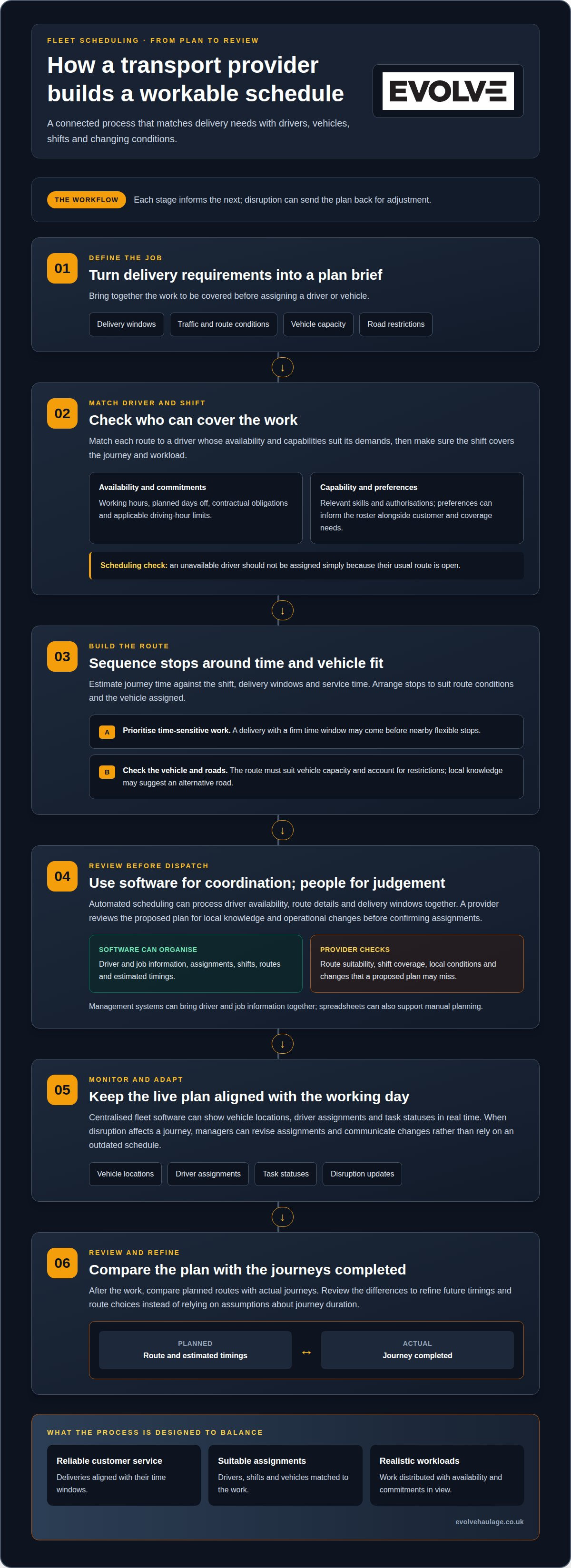
A workable fleet schedule is built around the job, not just the driver. Driver scheduling in transport management matches available drivers and suitable vehicles to routes, delivery windows and operational requirements. It must also account for shifts, contractual obligations, driver preferences and changing road conditions.
That balance matters: schedules need to serve customers reliably while distributing work realistically across the team. Transport management software can help coordinate driver assignments, routes and timings, while giving managers a clearer view of availability and planned workloads.
This article explains how fleet driver scheduling works, what software can contribute and how freight operations can account for maintenance, disruptions and drivers’ hours. You’ll also learn how availability, preferences and contractual commitments shape assignments, and what to consider when choosing professional transport management support.
Key Takeaways
- Route plans work best when they account for traffic, delivery windows and vehicle capacity together.
- Professional scheduling aligns driver availability and shifts with suitable routes and operational priorities.
- Considering preferences and contractual obligations helps create schedules that are practical for drivers and the operation.
- Freight scheduling also needs to factor in vehicle maintenance and contingency plans for disruptions.
What Driver Scheduling and Transport Management Services Are Available?
Route planning brings together traffic, delivery windows and vehicle capacity to create workable routes. Transport management software can also connect driver schedules with other operational information.
Driver Shifts and Availability
Shift and availability data show which drivers can cover each route and delivery window. A planner matches working hours, days off and relevant skills to the workload, then checks whether the assigned driver can complete the planned journey. For example, a route with timed deliveries needs a driver whose shift covers the estimated travel and service time.
Planning and Live Execution
Pre-shift planning sets routes, assignments and estimated timings before vehicles leave. It can account for traffic patterns, delivery windows, vehicle capacity and restrictions affecting particular vehicles. During the working day, centralised fleet software can show vehicle locations, driver assignments and task statuses in real time. Managers can then update the plan when disruption affects a journey.
Travel-Time Estimates and Route Comparisons
Route planning estimates how many journeys a driver can complete by calculating the time each route is likely to take. Traffic, road restrictions and delivery windows all affect whether those estimates fit within a shift. After the work, operators can compare planned routes with actual journeys. Reviewing the differences helps refine future timings and route choices instead of relying on assumptions about journey duration.
Software Costs and Features
The cost of a professional service combining driver scheduling and transport management depends on fleet size, route complexity, software scope and support needs, and is provided after a quote request. A useful service coordinates driver assignments, shifts, routes, delivery windows and vehicle capacity. To integrate with transport management systems, it should exchange relevant job, availability and assignment information with existing operational records. Shared information helps managers plan work and monitor progress without relying on disconnected schedules.
How does a professional transport provider manage schedules and routing for your operations?
A professional provider turns delivery requirements into driver assignments, shift plans and routes suited to each vehicle. The process balances delivery windows with working hours, route conditions and operational changes.
Driver and Shift Allocation
The provider matches each route with a driver whose availability and capabilities suit its demands. A management system can bring driver and job information together, while spreadsheets can support manual planning. The provider then checks that the shift covers the route and workload. This helps avoid assignments that leave a delivery uncovered or make a shift impractical.
Route Sequencing and Delivery Windows
Stop sequencing arranges deliveries to fit their time windows and route conditions. For example, a provider may prioritise a time-sensitive delivery before scheduling nearby flexible stops. The vehicle also matters: each route must suit the assigned vehicle and account for applicable road restrictions. Managers can adjust a proposed route when local knowledge suggests a more suitable option, such as an alternative road.
Automated Scheduling Trade-Offs
Automated scheduling can process driver availability, route details and delivery windows together, helping managers organise assignments consistently. Its limitation is that a proposed plan may miss local knowledge or an operational change. A professional provider reviews the output and applies judgement before confirming assignments. To choose an implementation provider, look for a clear process covering system fit, route planning, human oversight and communication.
Scheduling Risks and Mitigations
Poor scheduling can create missed delivery windows, unsuitable vehicle routes, uneven workloads or conflicts with working hours. Providers reduce these risks by checking driver and vehicle suitability, sequencing stops around delivery requirements and communicating changes promptly. During disruption, a manager can revise assignments rather than rely on an outdated schedule. For practical transport management support, these checks help connect plans with day-to-day operations.
Driver availability, preferences and contractual obligations
A workable assignment starts with each driver’s availability, contracted hours and planned days off. Fleet management brings these details together with delivery requirements, so routes go to drivers whose shifts can cover them. For example, a driver marked unavailable on a scheduled day off should not be assigned a job simply because their usual route is open.
Preferences can inform the roster without taking priority over operational requirements. Drivers may indicate preferred working hours, days off or routes, which managers can consider alongside customer commitments and coverage needs. A driver who prefers a familiar area may be a good match when their skills and availability also fit. Recording preferences consistently makes it easier to assess changes when demand shifts.
Contractual agreements shape the hours and duties available for scheduling. A professional provider considers those commitments alongside applicable driving-hour limits, rather than treating every open slot as available capacity. Assignments can then be balanced across the team, reducing the risk of repeatedly loading work onto one person while others remain underused. Planned rest days should also remain visible in the roster.
Matching drivers to work involves more than checking a calendar. The provider reviews availability, relevant driving authorisations and skills against each route’s vehicle and task requirements. For instance, a specialist delivery should be assigned to a driver with appropriate experience, if that driver is available within their agreed working pattern. Clear records help managers explain assignments and adjust them when absences or new work arise.
Useful fleet management records bring together shifts, preferences, contractual terms, days off and assignment changes. Managers can use these details to check whether work is distributed fairly and planned cover remains feasible. Driver feedback can also reveal recurring difficulties, such as a preferred route conflicting with delivery windows. Using that feedback in future schedules supports practical assignments without losing sight of service needs.
Scheduling for freight and passenger transport
Freight and passenger operations need different schedule structures, although both rely on feasible driver duties, suitable vehicles and clear contingency plans. The schedule should match the operating pattern to the service being delivered.
Freight scheduling starts with jobs, vehicle capacity, delivery commitments and road restrictions. A planner sequences collections and deliveries around traffic and expected journey times, then assigns suitable drivers and vehicles. Maintenance schedules matter too: a vehicle due for service should not be treated as available. For a demanding workload, transport scheduling software should be tested against plans involving hundreds of stops.
Passenger transport follows a service pattern, with drivers rostered to cover defined work blocks and duties. A roster matrix shows planned duties across a period and a group of drivers, helping managers distribute work and identify gaps. Relief points matter too: these are the places and times where one driver can hand over to another. This structure differs from freight, where job locations and delivery requirements shape each route.
Both types of operation need schedules that account for drivers’ hours, vehicle condition and workload distribution. Assigning duties fairly can help avoid overburdening some drivers while leaving others underused. Managers should also plan for breakdowns, traffic accidents and sudden changes. An emergency prioritisation process helps redistribute jobs or vehicles, while prompt communication ensures affected drivers receive updated assignments.
After journeys, managers can review actual activity and driver feedback to identify recurring delays or impractical duties. Telematics can provide information about driver behaviour, while operational records help compare outcomes with the original plan. These reviews can guide future scheduling adjustments without assuming every disruption has the same cause.
For freight operations that need coordinated planning and delivery support, discuss transport management and how it can fit your requirements.
Evolve Haulage: Transport Management
Evolve Haulage provides transport management to support smooth, compliant day-to-day logistics operations. This is a natural next step when driver assignments and route planning need to work alongside broader freight requirements, rather than apart from daily operations.
For businesses arranging road freight, Evolve Haulage also provides haulage services and consultancy. Its UK delivery solutions include time-critical same-day delivery and 24/7 delivery, which can support operational requirements where timing is a priority. The right support depends on the work involved, from coordinating transport activity to moving freight.
Share your transport requirements and the operational challenges you need to address. To discuss how Evolve Haulage can help, contact Evolve Haulage.
Make your next scheduling decision count
Good driver scheduling and transport management should support the way your operation works, not add another layer of administration. Identify where your current planning needs professional input, whether that means coordinating drivers and freight movements or improving transport processes.
Evolve Haulage supports businesses through transport management, haulage and consultancy services. A focused discussion about your operational requirements can help establish which support is relevant and how it can fit your day-to-day logistics.
Share the scheduling challenges and transport requirements you want to address. Contact Evolve Haulage about your scheduling to start the conversation and consider a practical way forward.
Frequently Asked Questions
How does fleet driver scheduling work?
Fleet driver scheduling assigns each driver to a duty or roster entry for a specific operating day. The planner considers the work to be covered, the driver’s availability and the vehicle assignment, then records changes such as absences or reassignments. For example, a newly urgent collection may require moving a driver from a flexible job while ensuring the original delivery remains covered.
How does routing factor into setting the schedule?
Routing determines how much journey and operating time a duty needs. A route affected by road restrictions or traffic delays may need a different departure time or stop order to meet its commitments. Reviewing where actual journeys differ from planned routes can show whether the schedule repeatedly underestimates a particular leg, helping improve future plans.
What criteria should a professional transport provider use to distribute routes among drivers?
A provider should match route demands with driver availability, relevant skills, vehicle suitability and agreed working patterns. It should also account for each driver’s existing workload, so urgent jobs do not consistently fall to the same people. For instance, a specialist task may suit an experienced driver while another available colleague covers routine work, provided both assignments are feasible.
What does a transport management system do?
A transport management system organises operational information so managers can coordinate jobs and track progress. Depending on its setup, it can bring assignments, vehicle details and task statuses into a shared view. This helps managers spot an uncovered job or assignment change sooner, then update the plan using current information rather than disconnected records.
What is the difference between a driver's schedule and working hours?
A driver’s schedule sets the days and times they are behind the wheel or on duty. Working hours can include time spent driving and carrying out related tasks. For example, a schedule records a planned duty, while working-hour records can include related tasks outside the driving period.
Which KPIs should a TMS improve?
Choose measures linked to operational priorities, such as delivery-window performance, planned versus actual journey duration, completed tasks and workload distribution. Driver work records can also help compare the original plan with actual activity. Review these measures together: a faster route is not useful if it leads to missed delivery commitments or unevenly distributed work.


