

A freight quote is useful only if it reflects the shipment you need. To understand how to get a freight quote, provide the collection and delivery points, cargo details, package dimensions and weight, and any special handling requirements. The cost depends on these details and the service required, so changes to the shipment or delivery conditions can affect the quoted price.
It’s reasonable to want a clear figure you can compare, without unexplained charges. A UK freight quote doesn’t automatically include import duty, VAT or every customs cost, and estimates may be based on assumptions about the journey.
This guide explains which shipment details to provide, what can affect freight costs and how to distinguish confirmed charges from estimates and exclusions. You’ll also learn what to compare in a quote, including service type, validity period, transit-time assumptions and potential extra costs, so you can make an informed decision about your shipment.
Key Takeaways
- Compare the full delivered cost, not just the headline figure, and note the quote’s validity period and assumptions.
- Enter precise collection and delivery points, including any access or handling requirements that could affect the journey.
- Separate confirmed charges from estimates and exclusions, including customs-related costs and transit-time assumptions.
- Give complete cargo details and shipment requirements so the transport option and quote reflect the work involved.
How Much Does It Cost To Ship Freight?
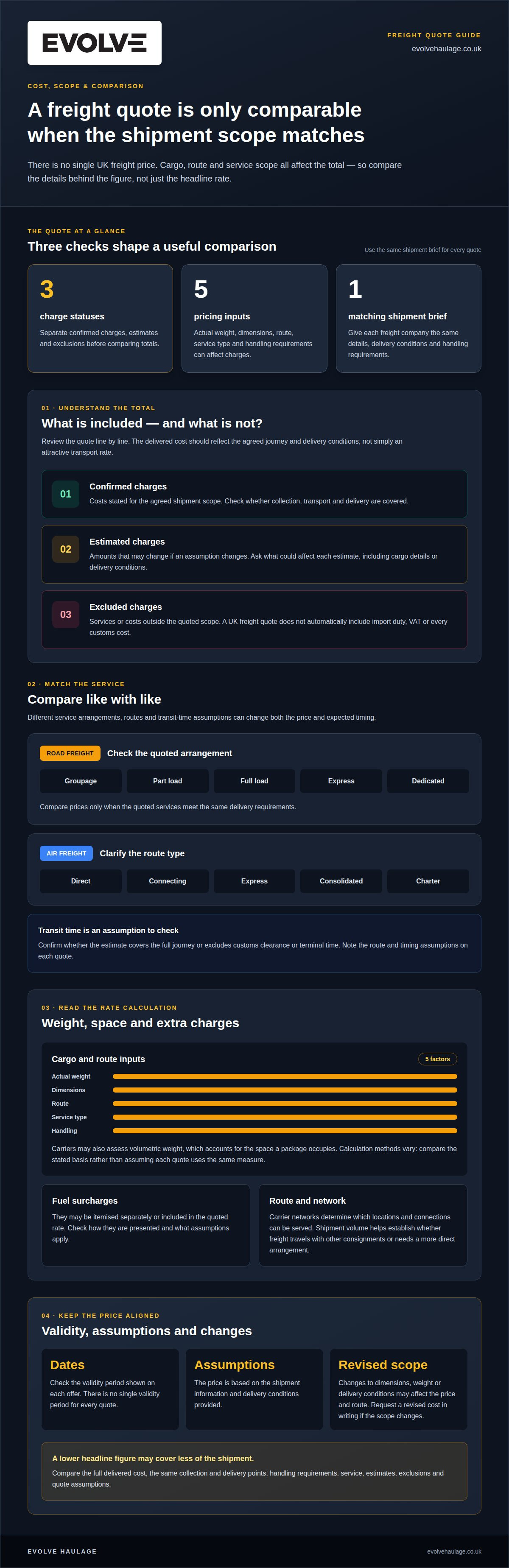
There’s no single UK freight price: the total depends on the cargo, route and service scope. Compare quotes based on the same shipment details, not just the headline figures.
Compare delivered costs
The delivered cost covers the agreed journey and delivery conditions, not just an attractive transport rate. Check what each quote includes, such as collection, transport and delivery, and note estimates, exclusions and potential extra charges. A lower headline price may cover less of the shipment.
Send each freight company the same shipment brief so the prices reflect the same scope. For example, check whether both quotes cover the same collection point, delivery address and handling requirements. Note each quote’s assumptions and validity period before comparing totals.
Assess transport modes and routes
Compare services that match your route and timing needs. For road freight, check whether the quote covers groupage, part load, full load, express or dedicated transport. These are different service arrangements, so compare prices only when the quoted services meet the same delivery requirements.
Transit time also matters. Check whether the estimate covers the full journey or excludes customs clearance or terminal time. For air freight, clarify whether the service is direct, connecting, express, consolidated or charter. A different route or service can affect both the price and expected timing.
Review carrier rates and quote calculations
Freight charges can depend on the cargo’s actual weight and dimensions, route, service type and handling requirements. Carriers may also assess volumetric weight, which accounts for the space a package occupies in transport. Calculation methods vary, so compare the stated basis rather than assuming every quote uses the same measure.
Fuel surcharges may be itemised separately or included in the quoted rate. Check how the carrier presents them and what assumptions apply. Before comparing rates, match the shipment details and transport service, then review the quote’s cost breakdown to understand the total and any variable charges.
Check quote validity and price changes
Freight quotes should state their validity period and the assumptions behind the price. There is no single validity period for every quote, so use the dates shown on each offer to judge whether it remains current. The price is based on the shipment information and delivery conditions provided.
Changes to cargo dimensions, weight or delivery conditions may affect the price and route. If the shipment scope changes, request a revised cost in writing before proceeding. This keeps the agreed price aligned with the actual consignment, rather than relying on an earlier figure based on different details.
Entering shipment origin and destination
Enter precise collection and delivery locations, as a postcode alone may not explain vehicle access or the exact collection point. Include the full address, site or business name, and a named contact at each end. For example, specify a loading bay rather than a reception entrance if that’s where the driver must collect.
Add practical access details for both addresses. Explain whether the vehicle can reach the loading point, where it can stop, and whether entry is restricted or deliveries are timed. A busy town-centre site may need different coordination from an accessible industrial unit. Clear details help identify a workable route and avoid assumptions.
Route options also depend on the carrier’s network and shipment volume. The network determines which locations and connections the carrier can serve, while volume helps establish whether freight can travel with other consignments or needs a more direct arrangement. Provide both collection and delivery points so the route can be assessed as one journey.
Build a complete shipment brief before requesting a quote. Include:
- Collection and delivery addresses, site contacts and access instructions.
- Cargo description, package count, dimensions, total weight and handling requirements.
- Preferred collection date, delivery timing and any constraints at either location.
For a UK shipment between business sites, say whether the cargo is ready for collection and whether delivery needs a booked slot. If the route crosses a border, identify who handles import and export declarations and who supplies the commercial documents. These responsibilities affect how the movement is organised.
Prepare the freight for its route and expected handling. Pack and secure each item so it stays stable during loading, transport and unloading. Make labels and handling instructions visible, and ensure the shipment brief matches the actual cargo. Accurate route details and a consistent description give the quote a reliable operational basis.
Checking included, estimated and excluded charges
A useful freight quote separates confirmed charges from estimates and explains what could trigger extra costs. Compare the same shipment scope across quotes, then review the assumptions behind each total.
To compare freight quotes and spot potential hidden fees, match the services and route first. Then check the status, conditions and exclusions for each charge instead of treating every quoted total as final.
Review the quote line by line. Check for charges covering collection, transport and delivery, and note any items marked as estimates. Ask what could change each estimated amount, such as different delivery conditions or cargo details. A clear breakdown helps distinguish included work from potential additional costs.
- Confirmed charges: costs stated for the agreed shipment scope.
- Estimated charges: amounts that may change when an assumption changes.
- Excluded charges: services or costs outside the quoted scope.
For UK shipments, a freight quote does not automatically include import duty, VAT or every customs cost. The quote should clarify which customs-related charges are included, excluded or estimated, rather than implying they’re covered in the freight total.
For international movements, establish who is responsible for import and export declarations and who supplies the commercial documents. Resolve uncertain customs questions before the cargo leaves the supplier. This helps clarify responsibilities and costs before the movement begins.
Read the transit-time wording alongside the price. An estimate may exclude customs clearance or terminal time, affecting how the stated timeframe relates to the complete journey. Check which stages it covers and whether changes to the shipment scope or delivery conditions could lead to extra charges.
Review insurance and liability separately. Carrier liability and optional cargo insurance are distinct, and may depend on the transport mode, contract and declared cargo details. Don’t assume the freight price provides full replacement cover for lost or damaged goods. Check the stated liability terms and whether separate cargo insurance applies to your consignment.
Information needed for a freight quote
A precise quote starts with a complete description of the cargo and its journey. Include the details that affect vehicle choice, handling and transport planning.
Provide shipment details
Describe the goods clearly, including the number of items or packages, packaging type and any handling requirements. Where relevant, say whether the cargo is fragile, hazardous or needs particular loading arrangements. Include collection and delivery dates or timing requirements, as well as any restrictions affecting loading or unloading.
For sea freight, specify whether the cargo is moving as FCL, LCL, breakbulk or another specialist option. For international shipments, include the commercial documents and clarify who supplies them. Also state who is responsible for import and export declarations so responsibilities are clear before arranging the movement.
Measure and weigh the shipment
Measure each packed item at its widest, longest and highest points, using the outside edges of the packaging. Record dimensions in a consistent unit, such as centimetres, and weigh each package after packing. Provide the measurements of each item and the total shipment weight, including pallets or other transport packaging.
For multiple packages, list each package’s dimensions and weight instead of providing an average. Note whether items can be stacked and whether they must remain upright. These details help establish space and handling requirements. Estimates based on unpacked goods may not reflect the cargo as prepared for transport.
Make the shipment description match the goods presented for collection. For example, if the final consignment includes palletised items, provide the packed pallet measurements and total weight. If the shipment changes after the quote, the revised details may affect the price or route.
For road freight, include handling constraints that affect loading or delivery. For sea freight, the cargo format helps distinguish a full-container movement from shared-container or specialist handling. Accurate details support a quote based on the actual transport requirement.
Discuss your freight requirements with the team when you need support preparing a clear shipment brief.
Evolve Haulage
Evolve Haulage helps businesses plan freight movements through haulage, transport management and consultancy. Once you’ve prepared your route and cargo details, the team can help align the transport requirement with your operational needs, whether you’re arranging regular freight or a time-critical delivery.
Transport management can support the coordination of day-to-day logistics, while consultancy can help clarify shipment requirements and planning considerations. For urgent UK deliveries, Evolve Haulage also provides 24/7 and same-day delivery solutions. A clear brief covering the cargo, collection and destination gives the discussion a practical starting point.
If you’re planning a shipment or reviewing its transport requirements, contact Evolve Haulage to discuss the next step.
Turn your quote into a shipment plan
A freight quote can inform a wider operational decision, not just a transport booking. Use it to plan how a consignment fits your schedule, internal logistics and delivery priorities. Understanding how to get a freight quote gives you a stronger starting point for that conversation, especially when the movement is part of ongoing supply chain activity.
Evolve Haulage supports the next step through haulage, transport management and consultancy. These services connect your transport requirements with the wider planning involved in moving freight. Share the shipment’s purpose, timing and operational priorities so the discussion can focus on the practical needs behind the journey.
When you’re ready to discuss your shipment and its transport requirements, contact Evolve Haulage about your shipment. A clear conversation can help you move from quote planning towards a workable next step.
Frequently Asked Questions
What should a freight quote include?
A useful quote should make the service arrangement clear enough to plan around. Check the collection and delivery schedule, service type and how operational updates will be shared. It should also identify a day-to-day contact and explain what happens if the schedule changes. These details show how the movement will be managed, not just what the service covers.
When will I receive a quote?
The time needed to prepare a quote depends on how quickly the transport requirements can be assessed. A regular movement on a familiar route may need less coordination than a shipment involving unusual handling or a time-critical schedule. Clarifying the proposed plan can also affect preparation time. Include your preferred collection date and delivery window from the outset so the request can be assessed against your schedule.
What information do freight companies need to provide a quote?
Alongside the core shipment details, include any reference numbers your business uses to track the consignment or match it to an order. Say whether the movement is a one-off or recurring requirement, and identify any booked loading or delivery slots. These details help shape a workable plan and coordinate the shipment with your dispatch and receiving processes.
How do I get a freight quote for UK domestic shipping?
For a domestic movement, state whether you need a single delivery or a recurring transport arrangement. Include a delivery date your receiving team can accommodate and any site-specific booking process. If the shipment supports a production schedule or customer commitment, explain the timing context. This frames the request around the operational outcome, rather than treating the journey as an isolated collection and delivery.
How do I get a freight quote for international shipping from the UK?
For an international request, specify whether transport should end at a port, another handover point or the consignee’s premises. Identify the countries involved and describe any planned transfer between transport stages. Include your preferred shipment schedule or required arrival window. This gives the movement a clear operational scope without assuming every journey has the same handovers. If your consignment involves personal effects or corporate relocation to regions such as South Africa, international movers like Execu-Move can help ensure door-to-door handovers and destination protocols are clearly factored into your quote.
How do I get quotes for pallets, oversized cargo or partial loads?
Explain how the cargo can be loaded and unloaded, including whether a forklift or other site equipment is available. For oversized items, describe projecting parts or shapes that could affect access or positioning. For a partial load, state whether the goods can travel alongside other freight and whether they need to stay together. These details help establish a practical loading plan, not just one based on dimensions.


