

An operator licence is not a compliance task a director can simply hand off. A haulage company with transport consultancy can support operators with applications and ongoing transport management, but directors remain responsible for compliance. The transport manager must effectively and continuously manage the organisation’s transport activities.
That distinction matters: preparing an application is only one part of running a compliant operation. HGV transport operations should also be audited at least annually. An audit can help identify issues and keep day-to-day processes aligned with requirements.
This guide explains what transport consultancy can cover, how licensing applications relate to ongoing management, and what to consider when choosing support. It also covers audits for HGV, van and PSV operators, and how consultancy can connect with practical haulage and transport management needs.
Key Takeaways
- Understand why directors retain responsibility for Operator Licence compliance, even when a transport manager is appointed.
- Learn what effective, continuous management of an organisation’s transport activities involves in day-to-day operations.
- See why HGV transport operations should be audited at least annually, and how audits can help identify areas that need attention.
- Explore how consultancy can support HGV, van and PSV operators with transport-management needs suited to their operations.
- Understand how the scope of consultancy work and the support required influence its cost, and what to consider when planning your next step.
Nationwide consultancy coverage
Nationwide support should fit an operator’s routes, fleet structure and working practices. A business with vehicles across several depots may need consistent procedures and clear reporting between teams. A single-site operator may instead prioritise a focused review of its records. Start by mapping depots, regular routes, vehicle types and transport responsibilities. This gives an adviser a practical picture of the operation and helps define the support required.
The UK consultancy market includes firms with different sizes and specialisms. More than 500 consulting firms were assessed for the UK Transport & Logistics ranking, which lists 40 qualifying top players. The latest edition of the Top Consulting Firms in the United Kingdom ranking assessed more than 1,400 consulting firms. These figures describe ranking activity, not whether a particular consultancy suits a haulage operator or supports its operating footprint.
Rankings can provide market context, but they cannot establish how support works across a distributed fleet. As of May 2026, the ranking’s global survey database spanned 5,000 client reviews and 20,000 consultant peer reviews, covering around 80 areas of service. Those broad measures do not show whether a consultancy’s approach fits an operator’s vehicle records, reporting arrangements or internal responsibilities. Assess the proposed work against the actual operating model.
For example, an operator with vehicles assigned across several depots may need a consistent way to review roadworthiness records. A business working from one site might need a narrower assessment of its existing procedures. In either case, decide who will receive the findings, how actions will be assigned and how managers will track progress. These details help establish whether consultancy can support the organisation’s day-to-day operations.
- Map depots, routes and the people responsible for transport decisions.
- Define the operational issue, such as inconsistent records between teams.
- Set out how findings and follow-up actions will reach relevant staff.
Company sizes in the UK consultant transportation company list also vary. On Sep 21, 2026, the median employee size was 1-10 employees. The list included 88 companies with 11-50 employees, 31 with 51-200 employees and 11 with 201-500 employees. These figures describe listed companies, not the resources available for a particular assignment. Operators should focus on whether the proposed approach matches their fleet and management structure.
Assess nationwide support by its operational fit, not by a map or ranking alone. Before engaging a consultant, define the locations and teams involved, the records to review and the decisions the work needs to inform. This preparation helps identify consultancy suited to the way your transport operation runs.
Operator licensing applications and ongoing transport management
For an Operator Licence application, organise the operational information before preparing the submission. Set out the vehicles, operating arrangements, responsible people and systems that will support the proposed work. The application should reflect how the organisation will actually operate, not an ideal process staff cannot follow. Clear, consistent records also give managers a practical basis for maintaining oversight once operations begin.
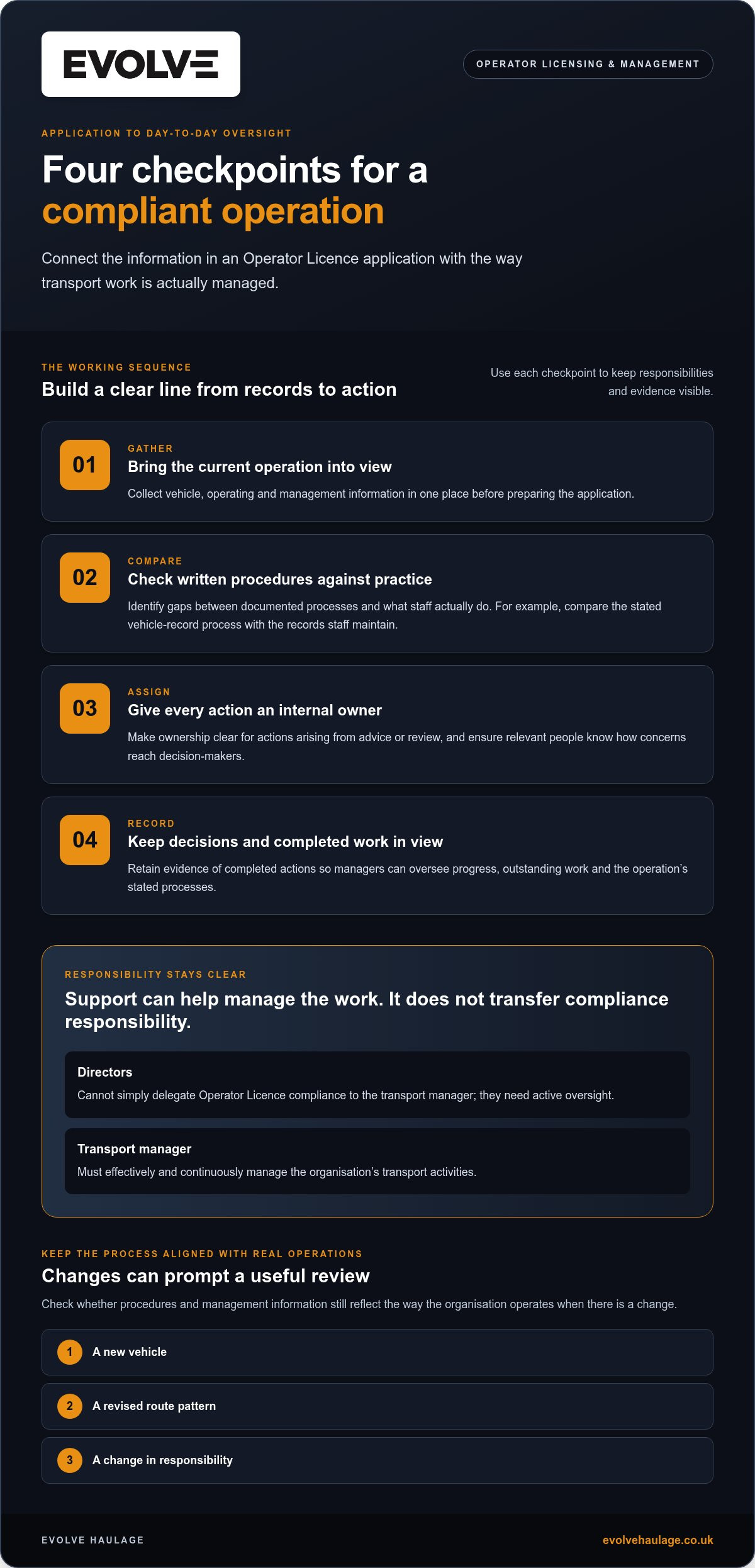
Ongoing responsibility matters as much as the initial application. HGV company directors cannot simply delegate Operator Licence compliance to their transport manager. A transport manager must effectively and continuously manage the organisation’s transport activities. Directors need to understand how responsibilities are assigned, how concerns reach decision-makers and how agreed actions are completed. Appointing a manager does not remove the need for active oversight.
Outsourcing advice creates risks if responsibilities become blurred or information is incomplete. Directors retain the compliance responsibility described above, so they should understand what the advice covers and who in the organisation will act on it. Inaccurate fleet details, missing records or unimplemented recommendations can weaken the value of external support. Keep decisions, actions and ownership visible to the people responsible for transport operations.
A structured process connects application work with day-to-day management:
- Gather current vehicle, operating and management information in one place.
- Identify gaps between documented procedures and what staff do in practice.
- Assign an internal owner to each action arising from advice or review.
- Record decisions and retain evidence of completed actions for management oversight.
For example, if an application describes a process for managing vehicle records, compare that process with the records staff actually maintain. If the organisation changes its fleet or working arrangements, review whether its procedures and management information still reflect operations. The specific review should follow the change: a new vehicle, a revised route pattern or a change in responsibility can each prompt useful questions.
Effective oversight also depends on communication. Transport managers need a clear route for raising operational issues, while directors need enough information to understand decisions and outstanding actions. Regular internal reviews can show whether responsibilities are being followed and records support the organisation’s stated processes. Focus reviews on evidence, owners and next steps rather than informal assurances.
When external guidance is part of that process, define its scope and connect recommendations to an internal owner. Operators looking to align advice with daily logistics can explore transport management support as a practical next step.
A UK transport planning consultancy recruited a Managing Director through Newsom Consulting. Heathrow’s Q6 capital expenditure programme was valued at £3bn, and its PMO Director was responsible for reporting, analysis and portfolio management to keep it on track, on time and within budget. These examples put recruitment and programme oversight alongside the broader need for clear responsibility. For transport operations, the useful question is whether the people named in plans have defined duties, receive relevant information and can report progress to decision-makers. Connecting those responsibilities to documented actions helps keep operational management visible from application preparation through ongoing oversight.
Transport consultancy for HGV, van and PSV operators
A haulage company with transport consultancy can connect advice with practical transport operations. A consultant can bring external analysis, while a haulage operator can bring operational knowledge to the discussion.
Transport consultancy costs
UK consultancy costs depend on the scope of work, fleet complexity and records available for review. Assessing one process differs from broader consultancy covering several vehicle types, sites or management procedures. Before agreeing the work, define the challenge, information to be reviewed, expected outputs and follow-up arrangements. This clarifies what the engagement covers and helps operators compare proposals by the work involved, not just the headline fee.
Fleet efficiency and transport costs
A UK haulage company can improve fleet efficiency by analysing how vehicles, schedules and driver records work together. Compare planned journeys with actual operations, then look for avoidable empty running, recurring delays or gaps in daily logs. Use the findings to refine scheduling, allocate suitable vehicles and address repeated issues. Better use of fleet resources can support cost control, but analysis should reflect the operator’s actual work patterns.
HGV, van and PSV operators face different operational challenges. An HGV review might examine vehicle roadworthiness records alongside driver logs. A van operator could assess how vehicles are assigned to daily jobs. A PSV operator may need analysis shaped around its own operating pattern. A haulage company with transport consultancy can connect these examples to operational decisions instead of applying the same template to every business.
HGV operations should be audited at least annually. Compare documented processes with day-to-day practice. For example, check whether staff record defects and actions consistently alongside vehicle maintenance records. Identify gaps, assign an internal owner and track corrective work. An audit is most useful when its findings inform practical changes to fleet procedures and record handling.
Operators can prepare for a review by organising information around the questions they need answered:
- Group vehicle and roadworthiness records by vehicle type.
- Bring together daily driver logs and relevant operating procedures.
- Note recurring delays, record gaps or fleet-allocation difficulties.
- Identify who will assess recommendations and coordinate follow-up.
This preparation helps an adviser distinguish isolated record issues from wider process challenges. It also gives managers a basis for prioritising recommendations. Repeated gaps across HGV logs may call for a process review, while an isolated missing entry may need a targeted correction. Link each finding to a practical decision, a responsible person and a follow-up action.
Access to company contact details
Clear contact details help operators direct fleet questions to the right person. For a roadworthiness review, staff may need to reach the person responsible for vehicle records, daily driver logs or audit actions. A central contact directory makes responsibilities visible, especially when drivers, depot teams and managers work across different locations.
Start by recording each contact’s name, role and responsibility. For example, list who handles defect reports, maintains vehicle files and reviews driver records. Keep these details with the relevant internal procedure, so employees can identify the right contact without relying on informal messages. Update the directory whenever responsibilities change.
Company contact details need a clear purpose. Separate operational contacts from general enquiries, then describe the issue each person handles. A driver reporting a vehicle defect should follow the organisation’s reporting process, while a manager reviewing audit findings needs to reach the person responsible for corrective actions. Clear routing reduces delays and helps preserve a useful record of decisions.
For an external consultancy discussion, prepare information that explains the request. Identify the vehicle group involved, the records to review and the operational question to resolve. Share relevant documents through the organisation’s approved process, and note who supplied them. This gives the discussion context without sending unrelated fleet information.
- Record contact names, roles and areas of responsibility.
- State which operational question each contact handles.
- Keep procedures and contact details together for staff reference.
- Review entries when a role or reporting process changes.
Clear ownership is important for compliance work. If a daily log has a gap, staff should know who reviews it and who records the follow-up. If a vehicle file lacks a maintenance entry, the directory should help identify who can locate or clarify the record. Clear responsibilities make information accessible to the people handling the issue.
Use a consistent format across depots, even if teams manage different vehicle types. A shared directory can distinguish HGV, van and PSV responsibilities without duplicating unrelated information. Give staff access appropriate to their roles, so they can find the details needed for their duties. When reviewing the directory, test a realistic scenario: could a new team member identify whom to contact about an incomplete driver log?
Finally, connect contact records to follow-up. After a fleet audit, record who received each finding, who owns the response and where completion evidence will be stored. This creates a traceable route from the initial issue to its resolution. A contact list then becomes a working part of fleet administration, not just a static collection of names.
The listed UK consultant transportation companies averaged 6.1 tracked contacts per company. That figure offers a point of comparison when deciding whether a directory is detailed enough to support clear routing and dependable ownership.
How much does transport consultancy cost in the UK?
There is no single UK fee for transport consultancy because engagements cover different work. Reviewing a specific process differs from examining records, management arrangements and operating practices across a fleet. The cost depends on the case and is provided after a quote request. Key factors include the scope of work, fleet complexity, locations involved and information available.
Start by defining the decision or operational issue that needs attention. For example, an operator concerned about incomplete driver logs may need a focused review of record-keeping procedures. A business preparing for a broader management review may need analysis of several processes and evidence sources. A clear brief helps align the work with the actual need.
The condition of existing information can also shape the work. Well-organised vehicle records and consistent daily logs are easier to assess than documents spread across separate systems or depots. If records need sorting before review, that can affect the effort involved. Identify what is available, who maintains it and how staff can access it.
Before agreeing an engagement, request a written outline that sets out:
- The operational question or outcome the work addresses.
- The records, procedures and vehicle groups included in the review.
- The expected findings, recommendations and follow-up responsibilities.
- Any work that sits outside the agreed scope.
A clear scope makes comparisons more meaningful. Two proposals may use similar labels but cover different activities. One may examine daily driver logs, while another may also assess how findings are escalated and resolved. Compare the work included, the information required and the form of the final recommendations, rather than focusing only on the headline figure.
For example, an HGV operator could define a review of roadworthiness documentation and defect reporting. The brief could specify which records are available, how the process works across depots and what managers need to decide. This gives a clearer basis for estimating the work than a broad request to “review compliance”. Avoid expanding the assignment informally, as adding records or sites can change its scope.
Preparation can help keep the engagement focused. Gather relevant procedures, sample logs and vehicle records before work begins. Identify a contact who can explain how each process operates and answer questions about missing information. These steps help the adviser distinguish a documentation gap from a wider operational issue.
If you’re ready to discuss the scope of a transport consultancy review, request a transport consultancy quote and outline the fleet issue you need to address.
Evolve Haulage: Haulage Service
Evolve Haulage supports UK operators with haulage, transport management and consultancy services. Turn to its consultancy when you need support reviewing transport operations, or use transport management to support day-to-day logistics. If you also need freight moved, its haulage service provides a practical connection between operational planning and delivery requirements. Evolve Haulage also provides 24/7 and time-critical same-day delivery solutions across the UK. These services suit operators looking to bring transport advice and haulage requirements together through one provider.
To discuss your transport requirements, contact Evolve Haulage.
Turn your next transport decision into action
Connect your operational priorities with a clear plan. Identify which findings need attention first, who will own each action and what information they need to progress it. This gives your team a practical basis for improving processes while keeping daily transport requirements in view.
A haulage company with transport consultancy can be a useful partner when you want advice connected with real transport operations. Evolve Haulage brings consultancy and transport management together with its haulage service, supporting businesses that need operational guidance as well as freight movement. Start with the issue your organisation wants to address and the support needed to progress it.
Prepare a brief outline of your transport requirements and the outcome you’re working towards. Then contact Evolve Haulage today to discuss a practical next step for your operation.
Frequently Asked Questions
Which transport consultancy services do UK haulage companies provide?
UK transport consultancy can cover compliance guidance, operational reviews and transport-efficiency advice. It can help a business assess how it organises fleet activity, manages records or coordinates transport decisions. For example, a company reviewing repeated gaps in vehicle documentation could seek an assessment of its processes and practical recommendations. A haulage company with transport consultancy may also combine advice with transport management or freight services, depending on the operator’s requirements.
What UK licences and permits are required to operate a haulage company?
An Operator Licence is a key consideration for HGV operators, and requirements depend on the vehicles and transport activity involved. The operation’s vehicle use, operating arrangements and the nature of the work determine which licensing obligations apply. Businesses should also plan how their organisation will manage its licence after an application, rather than treating submission as the final task. Directors retain compliance responsibility, even when transport management duties are assigned.
What should businesses check when choosing a haulage company with consultancy services?
Check that the proposed work matches the problem you need to solve, then clarify its scope and intended outputs. If your concern is missing driver documentation, for example, establish whether the review covers record processes, staff responsibilities and recommended actions. Consider, too, how the provider connects advice with practical transport operations. Clear responsibilities, relevant experience with your fleet type and useful recommendations help you assess whether the support fits.
Which haulage and transport consultancy firms serve my area in the UK?
Evolve Haulage serves customers nationally across the UK, providing road haulage, transport management and consultancy. Its consultancy helps businesses assess their transport arrangements, while transport management supports day-to-day logistics operations. If you need both commercial freight movement and a review of how transport is organised, consider how those requirements fit together before outlining the work. This helps focus an initial discussion on your operation’s practical needs.


