

A low spot rate is not always the lowest-cost transport decision. The benefit of haulage contracts is greater cost predictability and committed capacity for planned work, with service expectations agreed in advance. In the UK, contract haulage generally suits dependable weekly volumes, while spot haulage can work better for irregular, seasonal or one-off needs.
Keeping transport costs under control matters, but not at the expense of capacity needed to keep goods moving. A contract can align rates, fuel arrangements, capacity and performance measures with your operating pattern. It works best when the commitment reflects actual demand. This guide explains how haulage contracts work and what to weigh before choosing one.
We’ll look at how contract haulage fits into road freight, how agreed terms support cost planning, and why value depends on reliable performance as well as price. You’ll have a practical way to assess whether a planned arrangement or flexible spot bookings better suit your freight needs.
Key Takeaways
- Match a long-term haulage arrangement to dependable, planned freight volumes; irregular or one-off needs may suit spot bookings better.
- Agree how rates, fuel changes, capacity and service performance will be handled to make transport planning more predictable.
- Assess value through reliable delivery and clear service expectations, not price alone, and consider relevant compliance requirements.
- Use transport management or consultancy support to align haulage decisions with your day-to-day logistics needs.
Competing on value rather than price alone
A low quoted rate has limited value if missed collections interrupt a manufacturer’s supply chain. Compare each haulage offer against the service it commits to deliver, including collection and delivery times, capacity, communication and handling of problems. Contract terms make delivery time and service performance essential under each order, so record those expectations clearly before work begins.
Assess performance using practical measures, not general assurances. Hauliers can monitor on-time collections and deliveries, proof-of-delivery turnaround, claims or damage, response times, repeat work and customer feedback. These measures show whether transport supports reliable operations and delivers the return your business expects from logistics spending. Review them regularly to identify recurring problems and discuss improvements using specific examples.
Compliance is also part of value. Professional providers understand transport regulations and maintain relevant driver, vehicle, safety and documentation requirements. The Driver and Vehicle Standards Agency says an operator’s licence is needed for goods vehicles over 3.5 tonnes. In a tender, assess the vehicles, specialist capability and documentation against the work and the customer’s supply-chain requirements.
Contract terms can also address wider responsibilities. According to UK Parliament, the terms identify the UK Modern Slavery Act 2015 as part of the Modern Slavery Laws. According to the European Union, the terms list Regulation (EU) 2016/679 as applicable data protection legislation. According to UK Parliament, the terms list the UK Data Protection Act 2018 as applicable data protection legislation. These named requirements make it important to understand what obligations the contract assigns to each party.
For a practical value assessment, compare:
- Agreed delivery performance with your operational deadlines.
- Capacity and vehicle suitability with the freight profile.
- Claims, response and delivery records with stated service standards.
- Compliance documents and contract responsibilities with tender requirements.
Price matters, but it should be considered alongside measurable service, operational fit and compliance. This comparison shows whether a haulage agreement supports dependable operations, rather than simply offering an attractive opening rate.
Committed capacity and predictable costs
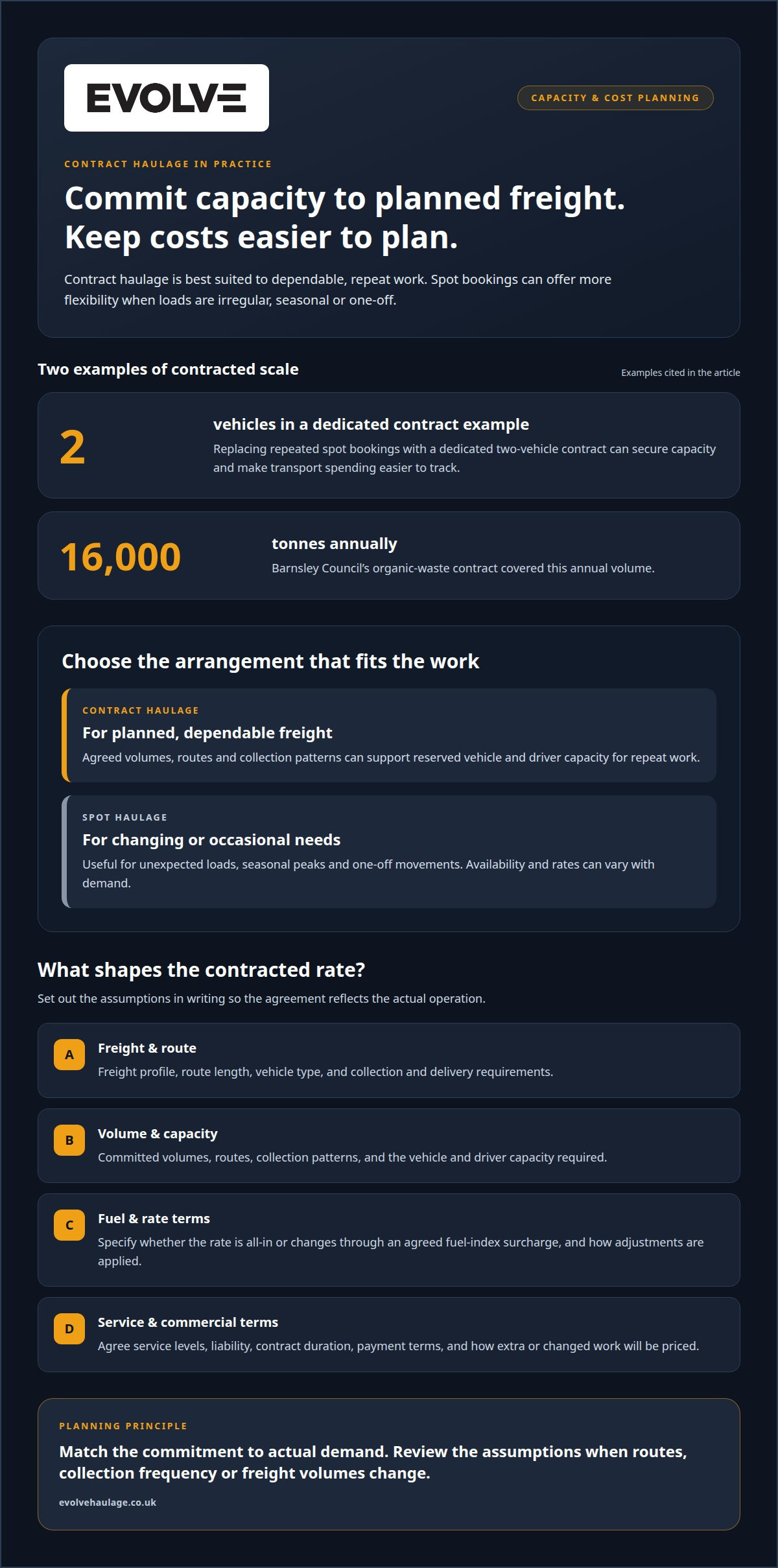
Contracts suit planned freight, while spot-rate transport is useful for irregular, seasonal or one-off jobs. UK contract rates reflect agreed volumes, routes, vehicle and driver needs, fuel arrangements, service levels and liability.
Securing transport capacity
A contract can reserve vehicles and driver capacity for dependable weekly freight, helping protect planned collections when demand is steady. Set out expected volumes, routes, collection patterns and capacity commitments so the agreement reflects actual operations. This consistency is also evident in specialised sectors; commercial recyclers such as Cash 4 Waste Oil rely on fixed, scheduled routes to manage regular pickups for regional hospitality businesses. For general freight, replacing repeated spot bookings with a dedicated two-vehicle contract can secure capacity and make transport spending easier to track.
Planning predictable transport costs
Agreed rates and fuel arrangements help businesses plan transport spending against forecast volumes. Specify whether the rate is all-in or changes through an agreed fuel-index surcharge, then define how adjustments are applied. Review these assumptions when routes, collection frequency or freight volumes change. This gives finance and logistics teams a clearer basis for budgeting, without treating every movement as an unplanned purchase.
Comparing contract and spot rates
Spot bookings offer flexibility for unexpected loads, seasonal peaks or one-off movements, but availability and rates can vary with demand. A contract links capacity and terms to planned work, making it better suited to repeat freight on established routes. Compare the overall operational fit, including the need for urgent replacement loads, rather than judging a single spot rate against a contracted rate.
Understanding contract pricing
Rates depend on the freight profile, route length, collection and delivery requirements, vehicle type, committed capacity and service expectations. Fuel arrangements, contract duration and liability terms also affect the commercial structure. Agree these elements in writing, along with payment terms and how extra or changed work will be priced. Clear assumptions make rate reviews more useful when operating needs shift.
For support aligning transport plans with operational requirements, explore transport management services.
Committed capacity is becoming more important for many UK shippers in 2026. Dependable weekly volumes may warrant dedicated haulage, with vehicles and driver resource committed to planned work. For instance, Barnsley Council’s organic-waste contract covered 16,000 tonnes annually, while commercial waste management operators such as Greenline Environmental similarly rely on scheduled vehicle capacity to ensure consistent collections and transport for businesses.
Contract haulage as a type of road haulage
Road haulage moves goods by road; contract haulage sets out an ongoing arrangement for that transport. The right structure depends on demand, operating requirements and how closely logistics must connect with daily business.
Available contract types
UK arrangements range from recurring work on agreed routes to dedicated haulage, where vehicles and driver capacity serve planned freight. Contract logistics goes further by outsourcing multiple supply-chain activities to a specialist operator, often through a long-term partnership integrated with daily operations. Spot haulage covers individual or irregular jobs. Before choosing, compare how regular your demand is and how far ahead you can plan loads.
Contract contents
A useful agreement records the work, capacity, rates, fuel arrangements, service measures, liability, responsibilities, duration, notice and exit terms. It should also explain how the parties will handle changed volumes, missed collections, claims and performance reviews, giving operational decisions a clear reference point.
Relevant requirements can include operator licensing, insurance, data protection, anti-corruption and employment transfers. Contract terms identify the UK Bribery Act 2010 and the Transfer of Undertakings (Protection of Employment) Regulations 2006. Set out which party manages each responsibility and what records support compliance.
Risks and disadvantages
A contract can limit flexibility if freight demand, routes or collection patterns change after capacity is committed. Planned volumes may no longer match actual work, while notice and exit clauses can restrict how quickly either party adjusts the arrangement. Review the contract duration, volume assumptions and termination terms together before signing.
Unclear liability, fuel adjustments or performance definitions can also lead to disputes. For example, a delivery KPI without an agreed measurement method may leave the operator and customer interpreting the same service record differently. Define the measures and review process in writing.
Negotiating and choosing a contract
Start by recording freight volumes, routes, collection patterns and service priorities. Use this operating profile to agree capacity, rates, fuel arrangements, KPIs, liability and contract duration. Assess the operator’s licence status, compliance history, financial standing, fleet suitability and insurance against the work required.
Then agree notice and exit terms, as well as responsibilities for licensing and performance records. A business with dependable weekly demand may value committed vehicles; one with seasonal or one-off freight may need more flexibility. Choose an agreement that fits actual operations, and use its terms as the reference for reviews and changes.
How can a haulage contract reduce transport costs?
A haulage contract can reduce avoidable spending by matching planned freight with agreed capacity and operating terms. For example, a business moving regular loads on established routes can plan collections together instead of arranging each movement separately. The benefit comes from matching the commitment to real demand, not simply choosing the lowest quoted rate.
Start by recording shipment frequency, routes, collection windows, freight type and vehicle requirements. Use this profile to agree what the rate covers and how additional work will be priced. Clear assumptions help prevent routine changes, such as a different collection point or delivery schedule, from turning into unexpected cost disputes.
Fuel arrangements are another important control. Agree whether pricing uses an all-in rate or a fuel-index surcharge, and specify how changes are calculated and applied. This gives both parties a consistent method when fuel costs shift. For subcontract haulage, record rates and payment terms in writing so the agreed cost and responsibility for each movement are clear.
Review operational performance alongside spending. Compare planned and actual loads, route requirements, service records and any extra movements. If a regular collection repeatedly requires urgent replacement transport, investigate the schedule or capacity plan. Addressing the cause can reduce avoidable bookings and make transport budgets better reflect day-to-day operations.
- Consolidate compatible freight and collections where delivery requirements allow.
- Match committed capacity to forecast volumes and established routes.
- Define fuel adjustments, extra-work rates and payment terms in writing.
- Review transport spend against delivery performance and changes in demand.
Transport management can help align these decisions with daily logistics and cost controls. Discuss your haulage requirements to explore a structured approach to planned transport.
A clear fuel clause should explain how fuel-price changes affect pricing, using either an agreed fuel-index surcharge or an all-in rate.
Evolve Haulage: Haulage Service
Evolve Haulage provides haulage services for businesses with planned freight movements or time-critical transport needs. Its Transport Management and Consultancy Services can help align logistics operations with delivery requirements and contract arrangements.
For urgent consignments, Evolve Haulage also provides 24/7 and time-critical same-day delivery solutions across the UK. This can suit businesses managing an unexpected shipment alongside their regular transport plans. A clear outline of your freight, collection and delivery requirements helps establish the support needed.
If you’re reviewing haulage capacity or transport arrangements, contact Evolve Haulage to discuss your requirements.
Put your transport plan into practice
Before changing transport arrangements, bring procurement, finance and logistics teams together around the same operating picture. A shared understanding of demand, service priorities and acceptable commitments makes it easier to judge whether a proposed agreement supports the wider business, not just one department.
So, what’s the benefit of haulage contracts for your operation? It depends on how well the terms fit your actual freight needs and support day-to-day decisions. At your next contract review, identify what should remain consistent, where flexibility matters and which responsibilities need clearer ownership.
Evolve Haulage can support businesses reviewing their haulage requirements. Contact Evolve Haulage to discuss a practical next step for your transport planning.
Frequently Asked Questions
What is road haulage?
Road haulage is the movement of goods by road using commercial vehicles. It can cover a single-pallet shipment, a full load or regular deliveries between business sites. For example, a manufacturer might use road transport to move finished products to a distribution point before they continue through the supply chain. The arrangement depends on the freight, collection point and delivery requirements.
Why should you work with a professional haulage company?
A professional haulier brings transport expertise and operational coordination to goods movements. This can help when a business lacks suitable vehicles or needs support coordinating driver schedules, collections and delivery documentation. For example, a company sending specialist equipment as a one-off shipment can use a haulage operator to organise the road movement around the load’s requirements, while its team focuses on production or customer service.
What are the benefits of a haulage contract for businesses?
A haulage contract gives a business a defined framework for recurring transport work, including agreed responsibilities and service expectations. This can make planning easier for teams coordinating production, dispatch and customer deliveries. For instance, a supplier with regular orders can align collection schedules with dispatch, helping departments follow a shared transport plan instead of arranging each movement independently.


