

The cheapest delivery plan isn’t always the one with the shortest route. To understand how to reduce haulage costs, look at how delivery sequences affect loaded and empty mileage, then match vehicle capacity and driver time to the work. Small planning changes can cut avoidable journeys without compromising delivery needs.
Fuel, vehicle use and scheduling all affect transport spending, so focusing on one expense can leave other inefficiencies untouched. This article explains how delivery sequences, fleet planning and key transport costs influence haulage spend, with practical ways to reduce day-to-day operating expenses.
You’ll find guidance on arranging drops, reviewing vehicle use, consolidating deliveries and tracking cost drivers such as fuel and mileage. These steps provide a clear basis for more efficient transport planning.
Key Takeaways
- Reorder delivery stops to reduce heavily laden mileage and avoid unnecessary fuel use.
- Match vehicle choice and driver time to delivery patterns, then review plans as demand changes.
- Consolidate compatible deliveries and look for return loads to reduce empty running.
- Track fuel, mileage and delivery performance together to see where transport spending can be improved.
1. Reducing fuel use by changing drop sequences
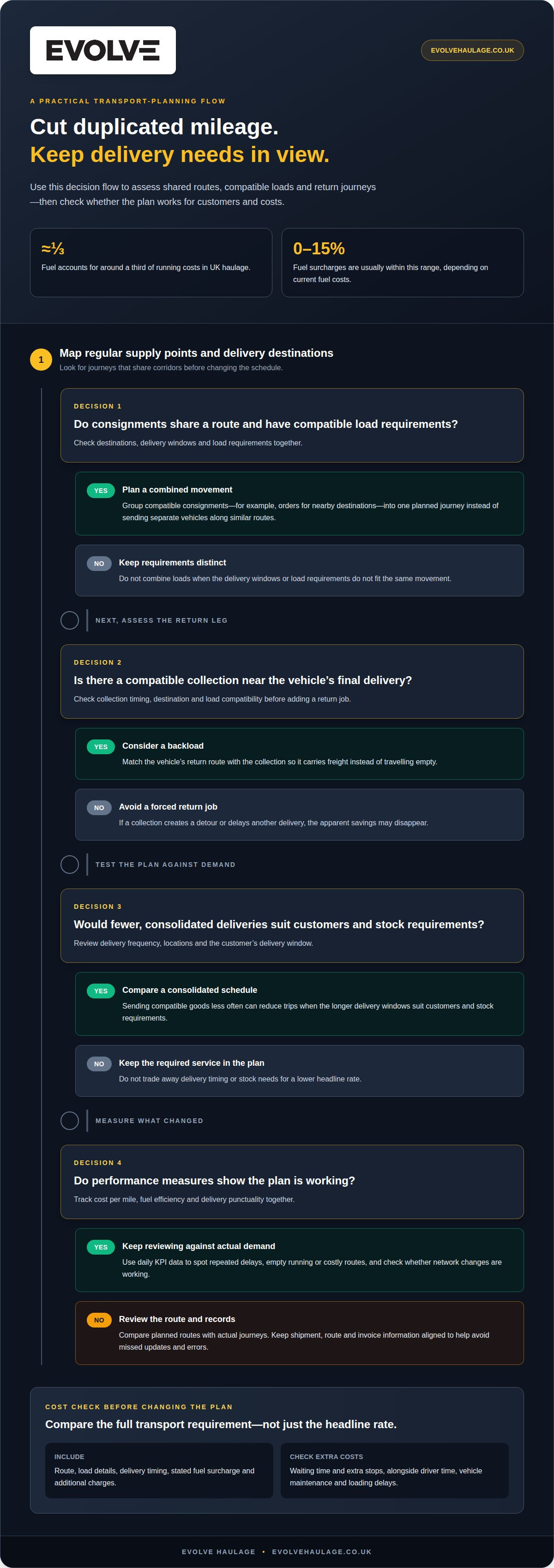
Fuel accounts for around a third of running costs in UK haulage, so delivery order matters. Fuel surcharges are usually between 0% and 15%, depending on current fuel costs. Review these expenses alongside route distance, driver time and load weight, rather than treating each delivery as a separate journey.
Map each collection and delivery against the vehicle’s load. If a heavy delivery and collection share a route, schedule the heavy drop first when that reduces loaded mileage. For example, a vehicle carrying several consignments can deliver the heaviest one before continuing to lighter drops. Check the sequence against delivery windows, access restrictions and expected traffic. A shorter route is not necessarily more efficient if it adds waiting time or delays later stops.
Fleet maintenance also affects fuel efficiency. Schedule regular servicing, tyre checks and fuel-use monitoring to spot developing problems and inefficient vehicle use. Driver behaviour matters too: smooth acceleration, appropriate braking and steady speeds can help reduce fuel consumption. Set clear efficiency goals, share results with drivers and recognise sustained improvements. This gives drivers a practical role in managing transport costs without encouraging unsafe or rushed driving.
Is it cheaper to outsource haulage or operate an in-house fleet in the UK? It depends on utilisation and total operating costs. Compare vehicle, maintenance and driver labour expenses with outsourced journey costs, including how each option accommodates changing demand and delivery patterns.
How can businesses compare UK haulage quotes and avoid hidden charges? Compare like-for-like journeys, including the route, load, delivery requirements and stated fuel surcharge. Ask for charges to be itemised, then check additional costs, such as waiting time or extra stops, against the planned operation. This clarifies the total cost and supports a more informed decision.
2. Strategic modelling of vehicles, driver hours and delivery patterns
Assess delivery patterns against vehicle capacity, driver time and actual journey conditions. Route plans should account for traffic, weather, daylight, one-way roads, avoidance zones, vehicle weight and load capacity. This helps streamline schedules and avoids assigning a vehicle that cannot carry the planned load.
Weight isn’t the only constraint. UK road freight businesses may use a volumetric-weight conversion of around 250 to 333 kilograms per cubic metre. Bulky, lightweight goods can therefore use available vehicle space before reaching its weight limit. Compare each load’s dimensions and mass when selecting a vehicle, then consider whether combining deliveries makes better use of capacity.
Connect transport plans to live vehicle tracking to identify off-route distance and delays between planned and actual journeys. Review fixed routes as customer lists, delivery times and seasonal patterns change. Model different vehicle sizes, delivery frequencies and locations against driver hours, then compare the resources each option requires. An HGV can typically travel 250 to 300 miles one-way for a same-day return, subject to drivers’ hours regulations.
UK plans must account for drivers’ hours rules and vehicle weight limits, which constrain driving schedules and payloads. Include applicable road charges in route calculations, as these depend on the route and vehicle.
Review fleet usage data to identify underused vehicles and equipment, which can increase the cost per movement. Preventive maintenance can reduce breakdown risk: track distance travelled, stops, fuel use and inspection results in a maintenance programme. Regular servicing can also extend equipment life and reduce emergency repairs.
For a practical review of delivery patterns and fleet planning, explore haulage planning support alongside your transport model.
3. How can transport and logistics businesses reduce operational costs?
Map regular supply points and delivery destinations to identify journeys that share corridors. Then combine compatible consignments into one planned movement instead of sending separate vehicles along similar routes. For example, group orders for nearby destinations when delivery windows and load requirements allow. This network view can reduce duplicated mileage and transport costs.
Consolidate outbound deliveries and look for backloads on return journeys. Match a vehicle’s return route with a collection near its final delivery, so it carries freight instead of travelling empty. Check collection timing, destination and load compatibility before adding a return job. If the collection creates a detour or delays another delivery, the apparent savings may disappear.
Review shipment consolidation against customer demand. Sending compatible goods less often can reduce trips, but longer delivery windows must suit customers and stock requirements. Map delivery frequency and locations, then compare the resulting route plan with the existing schedule. Automated route optimisation can help identify efficient combinations, but review its settings as customer locations, delivery windows and congestion change.
Cheaper haulage can bring risks if a lower quote leads to delays or service problems. Compare the full transport requirement, including delivery timing, load details and additional charges, rather than choosing on the headline rate alone.
Track cost per mile, fuel efficiency and delivery punctuality to see whether changes improve performance. Use daily key performance indicator data to spot repeated delays, empty running or costly routes. Keep shipment, route and invoice information aligned: disconnected processes or manual records can lead to missed updates and errors. Regularly compare costs with actual demand to see where network changes are working and where schedules need adjustment.
4. Main logistics transportation costs
Transportation can account for as much as 58% of total logistics expenses. To find savings, separate each movement into its cost components: mileage, fuel surcharge and additional charges. Then add related operating expenses, including driver time, vehicle maintenance and loading delays. This reveals whether route distance or another factor drives the total.
A useful comparison starts with total miles multiplied by the rate per mile, plus the fuel surcharge and other charges. Treat this as a planning estimate, not a complete cost picture. A low mileage rate, for example, may be offset by waiting charges, extra stops or a route requiring more driver time. Compare like-for-like loads, distances and delivery requirements across each option.
Vehicle size also changes the cost structure. UK haulage guide rates generally rise from 7.5-tonne vehicles to 18-tonners, then articulated lorries. A 44-tonne truck’s rate varies by firm and job, so capacity alone doesn’t show value. Full loads over 300 miles often have reduced per-mile rates, making load size and distance important factors in planning.
Track actual costs against planned costs for each route. Record mileage, fuel use, delivery punctuality, waiting time and extra charges in one system. Reviewing these figures helps logistics teams identify recurring cost increases and distinguish a one-off delay from a process problem. Accurate records also support clearer transport budgeting and decisions about operational improvements.
Cost savings come from understanding the whole journey, not selecting the lowest headline rate. Review loading and unloading arrangements to limit avoidable waiting, and include every applicable surcharge in your comparison. Transport Management can help organise day-to-day logistics around clearer cost information. Discuss transport management to improve oversight of your transport operations.
Evolve Haulage
Evolve Haulage helps businesses turn delivery planning into practical transport decisions. If mileage, vehicle use or shipment schedules are putting pressure on your operating budget, its Transport Management and Consultancy Service can support a more structured approach to day-to-day logistics. Its Haulage Service also handles business deliveries, including time-critical same-day requirements.
The right next step depends on the challenge: operational planning may call for transport management, while specific delivery requirements may need haulage support. Clear information about your loads, destinations, timings and existing processes helps shape a useful discussion about your needs.
Contact Evolve Haulage to discuss your transport requirements.
Put your next transport decision into practice
A practical answer to how to reduce haulage costs starts with deciding what your delivery plan needs to prioritise. Lower expenditure matters, but dependable delivery times and the ability to respond to changing demand matter too. Clarify those priorities before changing schedules or committing resources, so cost decisions support your wider business needs.
Use your next planning review to identify the operational pressure that matters most, such as fluctuating delivery demand or limited capacity. A focused discussion can turn that challenge into a workable next step for your transport arrangements.
Evolve Haulage can discuss your requirements and the support that best fits them. Contact Evolve Haulage to discuss your transport needs, and take the next step towards a more considered delivery plan.
Frequently Asked Questions
How can transport and logistics businesses reduce operational costs?
Reduce avoidable work by aligning transport schedules with actual order demand and keeping shipment, invoice and route records consistent. For example, compare planned journeys with completed deliveries to spot recurring delays, duplicate administration or charges that don’t match the service. A practical approach to how to reduce haulage costs is to use these findings to adjust processes, then track whether the change improves day-to-day operations.
What actually drives haulage costs?
Haulage costs reflect the resources needed to move a particular load: journey distance, vehicle capacity, fuel use, driver time and delivery requirements. Loading delays, extra stops and route changes can also affect the total. A delivery with a narrow time window, for instance, may need different scheduling from a flexible consignment. Assessing these factors together gives a more useful cost picture than mileage alone.
What are the main ways UK businesses can reduce haulage costs?
Businesses can reduce avoidable transport spending by making better use of vehicles, planning deliveries around demand and identifying journeys that create unnecessary work. Start with one recurring route or delivery pattern, identify the main source of wasted time or distance, then trial a practical adjustment. Measure the result against punctuality and service needs as well as cost, so savings don’t come at the expense of reliability.
How can route optimisation and load planning reduce haulage costs?
Route optimisation considers how stops fit together, while load planning matches consignments to available vehicle capacity. Used together, they can help avoid journeys carrying little freight or involving unnecessary detours. For example, review orders with nearby destinations and compatible handling needs before dispatch. Check that the proposed sequence meets delivery commitments and that the vehicle can safely accommodate the combined load.
How much can backloading and return-load matching save UK hauliers?
There’s no single saving that applies to every return load. The benefit depends on whether a suitable collection fits the vehicle’s route, timing and capacity, and whether the extra work creates detours or delays. Compare the planned return journey with the loaded alternative, including added distance and handling. The strongest opportunity is a compatible collection that uses otherwise unproductive vehicle capacity without disrupting other commitments.
How can fuel-efficient driving and vehicle maintenance lower haulage costs?
Smoother acceleration, steady speeds and considered braking can reduce fuel use during routine driving. Maintenance supports these efforts by helping identify issues that affect vehicle performance before they cause disruption. Track fuel consumption alongside mileage, inspection results and servicing records. A change in fuel use across comparable routes can prompt a useful review. Driver feedback can also highlight recurring traffic or loading conditions that affect efficiency.


