

Fuel can account for up to 40% of a transport company’s expenses, so driver training and efficient route planning are practical places to start when considering how to reduce transport costs. Regular vehicle maintenance and better use of available loads can also limit avoidable mileage and fuel use. The strongest approach is to look at how these operational choices work together.
Fuel is an obvious expense, but it is only part of the picture. Distance, freight volumes and shipping lanes affect transport costs, while delays, stockouts and production disruption can add indirect costs that are easy to overlook.
This article explains how to improve driving habits, plan practical routes, maintain vehicles proactively and use freight exchanges or load platforms to reduce empty running. It also shows how to review the wider logistics picture, so savings do not come at the expense of reliable deliveries.
Key Takeaways
- Use driver coaching and fuel-use monitoring to spot habits that add avoidable expense, then give drivers clear feedback.
- Review routes as demand changes, accounting for traffic, vehicle capacity and delivery constraints to reduce unnecessary mileage.
- Build inspections and maintenance around vehicle use so emerging issues can be addressed before they disrupt operations.
- Combine compatible shipments and use load platforms to find freight for return journeys and reduce empty running.
- Look beyond direct transport spend: distance, freight volumes and shipping lanes matter, while stockouts and delays can create further costs.
1. Eco-driving and driver training
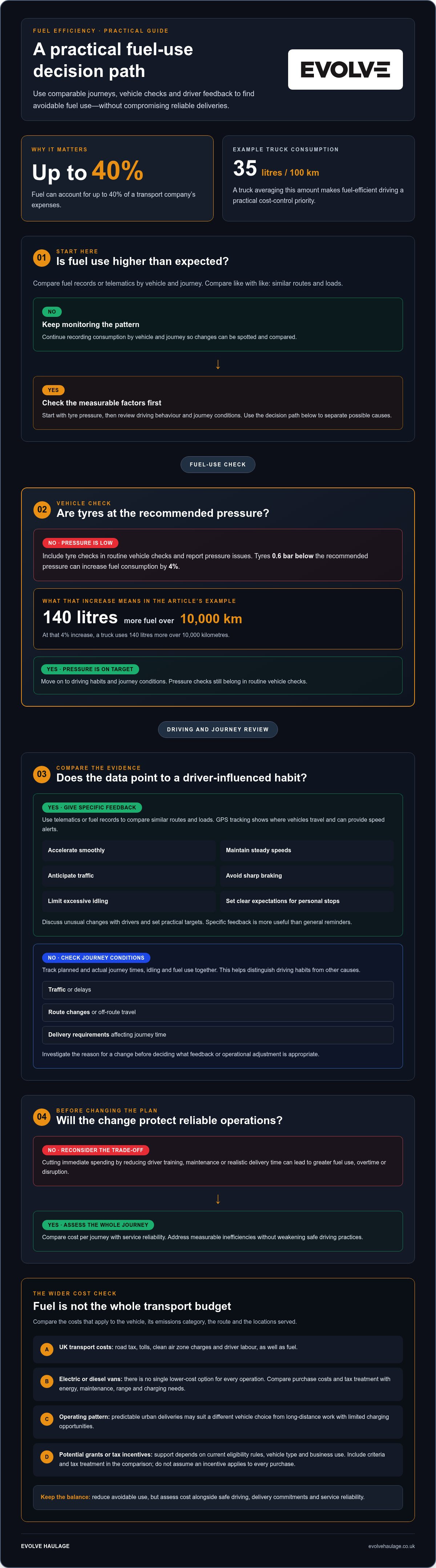
A truck averaging 35 litres per 100 kilometres makes fuel-efficient driving a practical cost-control priority. Coach drivers to accelerate smoothly, maintain steady speeds and anticipate traffic instead of braking sharply. Personal stops and excessive idling also consume time and fuel, so clear operating expectations help reduce avoidable use without compromising delivery standards.
Tyre pressure is another useful training and inspection point. Tyres 0.6 bar below the recommended pressure can increase fuel consumption by 4%. At that increase, a truck uses 140 litres more fuel over 10,000 kilometres. Include tyre checks in routine vehicle checks, and show drivers how reporting pressure issues supports both vehicle efficiency and dependable journeys.
Use telematics or fuel records to monitor consumption by vehicle and journey. Compare similar routes and loads, then discuss unusual changes with drivers before setting practical targets. GPS tracking shows where vehicles travel and can provide speed alerts. Route and consumption reports also help managers give specific feedback instead of relying on general reminders about careful driving.
Driver behaviour affects more than fuel use. Longer-than-planned journeys can increase overtime, while harsh acceleration and frequent braking can contribute to road incidents. Track planned and actual journey times, idling and fuel use together. This helps distinguish driving habits from delays caused by traffic, route changes or delivery requirements, so feedback focuses on factors drivers can influence.
Is it cheaper for UK businesses to use electric vans or diesel vans? There is no single lower-cost option for every operation. Compare purchase costs and tax treatment with energy, maintenance, range and charging needs. A predictable urban delivery pattern may suit a different vehicle choice from long-distance work with limited charging opportunities.
UK transport budgets should include road tax, tolls and clean air zone charges, as well as fuel and driver labour. These costs depend on the vehicle, its emissions category, the route and the locations served. Map regular journeys against these factors, then compare feasible routes and vehicle choices before changing a delivery plan.
What UK grants or tax incentives are available for low-emission commercial vehicles? Potential support depends on current eligibility rules, vehicle type and business use. Include grant criteria and tax treatment in the total-cost comparison, and do not assume an incentive applies to every van or fleet purchase.
The main trade-off is cutting immediate spending at the expense of operational performance. Reducing driver training, maintenance or realistic delivery time can lead to greater fuel use, overtime or disruption. Compare cost per journey with service reliability, then address measurable inefficiencies without weakening safe driving practices.
2. Route planning and optimisation
The shortest route on a map may still cost more if it ignores traffic, vehicle restrictions or delivery windows. Route optimisation balances distance with the conditions each vehicle and delivery must meet. Compare planned routes with actual journeys, then adjust when customer locations, demand or operating conditions change.
Set up route-planning tools with the details that affect each journey. Include traffic, weather, daylight, one-way roads and avoidance zones, as well as vehicle weight and load capacity. A route suitable for a lightly loaded van, for example, may not suit a heavier vehicle. Accurate settings produce practical routes, not simply short ones.
Review fixed routes regularly. Customer lists and seasonal demand change, so yesterday’s pattern may no longer suit current operations. Compare planned stops with current delivery locations, and test different delivery frequencies or vehicle sizes. If customers can accept a wider delivery window, that flexibility can help software find a more efficient sequence of stops.
Linking transport plans with vehicle telematics helps compare the planned route with the journey driven. Extra distance from off-route travel can then be identified and investigated. Route-optimiser reports can also show fuel expenditure and support specific driver feedback. Before revising a route or setting new expectations, distinguish recurring diversions from one-off changes such as road closures.
How much can fleet telematics and route optimisation reduce transport costs? There is no single saving for every fleet. Results depend on distances, delivery patterns and how well route plans match real operations. Businesses using automated route optimisation may see a return on investment in a few months, while ongoing monitoring can reveal further opportunities to improve efficiency.
For last-mile deliveries, group nearby stops into practical runs and sequence them around delivery windows, access constraints and traffic. Keep customers’ time requirements visible in the plan, and look for patterns in failed or delayed deliveries. Offering a choice of delivery windows can increase the chance of first-time delivery success while giving planners more flexibility to build efficient routes.
Measure route performance using planned and actual distance, fuel expenditure, completed deliveries and delays. Model scenarios by changing vehicle size, driver hours, delivery frequency or locations, then compare the operational impact. Do not judge a route by mileage alone: a slightly longer journey may better meet delivery commitments or suit vehicle capacity. Reviewing these measures together supports better-informed changes.
For teams coordinating journeys across changing delivery patterns, transport management support can help align route plans with day-to-day operations.
3. Preventive vehicle maintenance
A planned maintenance schedule helps identify wear before it causes vehicle failure. Use distance travelled, number of stops and fuel used to determine when each vehicle needs attention. A van making frequent urban deliveries may need different checks from a lorry covering longer motorway journeys. Record inspections and repairs against each vehicle to help spot recurring issues.
Build checks into the operating routine instead of waiting for a fault. After each journey, drivers can report warning lights, unusual noises, visible damage and changes in handling. A supervisor can review reports alongside mileage and service records, prioritising issues that affect safe, reliable operation. Consistent records also make maintenance trends easier to identify across the fleet.
Tyres deserve particular attention. Pressure 0.2 bar below the recommended level can increase fuel consumption by 1%. Include tyre pressure and visible condition in routine checks, and record defects for prompt follow-up. Under-inflation can be easy to miss during a busy shift, so assign responsibility for checks and make the process part of vehicle handover.
Effective preventive maintenance depends on understanding how vehicles are used. Compare fuel use, distance and stop patterns across similar vehicles. If one vehicle’s fuel use rises after a change in its work, inspect it for developing problems and review the route or load. This helps distinguish maintenance needs from operational changes instead of treating every increase as a mechanical fault.
How can businesses reduce vehicle maintenance, insurance and leasing costs? Match vehicle specifications and lease terms to actual routes, payloads and annual distance, then maintain a documented service history. Regular inspections can address emerging faults, while reviewing incident and repair trends helps managers target training and improve fleet risk management.
Leasing decisions should reflect vehicle use, not just the monthly commitment. Compare capacity with typical loads and examine how often vehicles sit unused or exceed their intended work pattern. A vehicle that is too large for regular deliveries can bring unnecessary running and maintenance demands. One with insufficient capacity may require extra journeys or fail to meet operational needs.
Maintenance planning matters across supply chains because one unavailable vehicle can disrupt collection, delivery and production schedules. Keep service tasks visible in the fleet calendar, coordinate them with quieter operating periods and arrange work before a vehicle is likely to fail. Review missed inspections and repeat repairs at management meetings, then update schedules based on the findings.
Track practical measures such as overdue inspections, repeat defects, downtime and maintenance spending by vehicle. These figures help identify trends and compare vehicles doing similar work. Use the results to adjust inspection frequency, replacement timing or vehicle allocation, while keeping service requirements and reliable delivery performance central to each decision.
4. Freight exchanges and load platforms
An empty return journey uses vehicle capacity without moving revenue-generating freight. Across Europe, empty vehicles carried out 12.5% of international cargo transport. Freight exchanges and order-handling platforms can help carriers find loads for a route, making them useful when planned deliveries leave capacity available for another shipment.
Start by identifying journeys that regularly return empty or carry only a partial load. Compare the route, vehicle capacity and timing with freight opportunities on a platform. For example, a carrier delivering goods to one area might find a compatible collection nearby for the return leg. Matching loads can reduce unproductive mileage and make better use of each journey.
Load consolidation is another way to improve vehicle utilisation. Combining smaller shipments into a larger one can reduce the number of trips needed to move the same goods. In a supply chain, this may mean coordinating collection times or grouping compatible orders before dispatch. The plan still needs to meet customer delivery requirements, so do not combine freight if extra handling or delay would undermine service. Smooth transfers also rely on suitable warehouse infrastructure—for operations managing depot workflows in key transit hubs, sourcing high-spec material handling equipment Singapore helps teams lift, stage and load consolidated cargo without unnecessary delays.
Use load-planning software to check how freight fits the vehicle before confirming a combined load. An application can account for permitted gross weight and axle loads when distributing cargo. This helps planners assess capacity rather than relying on volume alone. Accurate shipment dimensions and weights make the plan more useful and reduce the risk of assigning freight that cannot safely fit.
When is outsourcing transport or using a third-party logistics provider more cost-effective? It may make sense when demand fluctuates, internal vehicles are underused or transport management distracts from core operations. Compare the total cost and service fit of internal capacity with outsourced transport, considering shipment patterns, delivery requirements and the work involved in coordinating loads.
Before adopting a freight exchange, define which journeys and shipment types suit the operation. Record available vehicle capacity, collection and delivery locations, timing requirements and handling needs. Use those criteria to assess potential matches. A load that appears suitable by route may not fit the vehicle, schedule or delivery commitments.
Review results using practical measures: empty mileage, vehicle utilisation, completed deliveries and delays. Compare similar routes before and after consolidating freight or finding return loads. If a change adds handling or leads to missed delivery windows, adjust the matching rules. This makes platform use a managed supply-chain decision, rather than an assumption that every available load improves efficiency.
Freight audit and payment services can check bills for accuracy, identify and recover overcharges, and reduce administrative costs. For carriers using exchanges, reviewing billing alongside empty mileage and utilisation provides a fuller picture of completed movements. Invoice checks can also reveal discrepancies that might be overlooked when attention is focused on matching loads and meeting delivery requirements.
Predictive analytics can use data to forecast freight volumes, identify trends and flag potential issues before they occur. These insights support capacity planning by helping carriers anticipate when available vehicles may not match expected freight demand. Alongside regular reviews of platform results, forecasting can reveal changing patterns and indicate where load planning may need adjustment. For haulage and freight operators looking to automate operational data and capacity planning, platforms like logivo.ai use artificial intelligence to coordinate loads and resources more effectively.
5. Main transportation logistics costs
A useful cost review starts with the full logistics picture, not just the transport invoice. Fuel prices, distance, freight volumes and shipping lanes all influence the direct cost of moving goods. Indirect costs matter too: inventory carrying costs, lost sales from stockouts, and production or delivery delays can make an apparently cheaper option more expensive overall.
Build a cost map for each regular shipment lane. Record freight volume, origin, destination, delivery requirements and transport mode, then separate direct transport charges from indirect effects. For example, a delayed shipment may increase inventory needs or interrupt production. Including these consequences helps managers compare like with like instead of focusing only on the initial freight charge.
How can businesses compare road, rail, sea and air freight costs in the UK? Compare each mode for the same shipment, destination and delivery requirement, including collection, transfers, final delivery and any added inventory time. Road, rail, sea and air can also form part of an intermodal journey, with multiple modes moving goods through the supply chain.
Use cost per delivered unit as a practical comparison measure. Match shipment quantities and service requirements, then include transfer handling and the effect of transit time. A low transport charge may not represent good value if slower movement requires more stock or causes production delays. A faster option may be justified for time-sensitive goods when delays risk lost sales.
Freight volumes and shipping lanes can change the outcome. Compare regular full loads with smaller, more frequent consignments, and assess whether shipment timing can be coordinated. A lane with predictable volume may suit a different transport plan from one with fluctuating demand. Review patterns over time, because rising volumes or changing destinations can alter the most suitable option.
Include operational consequences in the comparison. For each mode or combination, consider collection and delivery coordination, transfer handling, inventory needs and the impact of delays. For example, a road leg connecting a factory to a rail service may add handling but suit a longer journey. The overall logistics cost depends on the full chain, not any single leg.
Review actual results against the plan after shipments arrive. Compare transport charges, freight volume, delivery timing and any effects on stock or production. If a particular lane repeatedly causes delays, assess whether the mode combination, schedule or shipment frequency needs to change. This ties cost decisions to operational evidence rather than assumptions.
A structured transport management review can help bring shipment costs, delivery requirements and operational priorities into one comparison, supporting clearer decisions across your logistics network.
Evolve Haulage: Haulage Service
Evolve Haulage provides dedicated road haulage for businesses moving freight across the UK. If your own vehicles or transport processes are creating operational pressure, its Transport Management and Consultancy Service can support day-to-day logistics planning. For urgent requirements, Evolve Haulage also provides 24/7 and time-critical same-day delivery solutions across the UK. The right next step depends on the freight, route and delivery requirements your operation needs to meet. Discuss your transport requirements with Evolve Haulage to explore a practical way forward for your business.
Contact Evolve Haulage to discuss your haulage and transport management needs.
Turn your cost review into a practical plan
Turn your findings into an operational priority. Choose one area where spending and service performance can both be measured, establish a baseline, then review the effect of a change before applying it across the wider operation. This makes it easier to reduce transport costs without losing sight of delivery requirements.
If you need support putting that plan into practice, Evolve Haulage offers Haulage Service, Transport Management and Consultancy Service. These options can help businesses address freight movements or improve the way transport is managed, according to their operational needs.
Start with the issue that creates the greatest pressure for your business, whether that is arranging haulage or coordinating transport more effectively. A focused discussion can help clarify the next practical step for your operation. Contact Evolve Haulage to discuss options and move forward with a considered transport plan.
Frequently Asked Questions
What else can generate savings?
Freight invoice audits, rate reviews and demand forecasting can reveal savings beyond vehicle operations. Check invoices against agreed shipment details to identify billing errors or duplicate charges, then use shipment volumes and existing carrier relationships when discussing rates and terms. Forecasting can help anticipate freight demand and spot operational issues earlier. For example, a business expecting a seasonal increase can plan capacity before urgent shipments become necessary.
What are the most effective ways to reduce transport costs for UK businesses?
Target the largest avoidable costs first, using a consistent measure such as cost per completed shipment. Compare spending across similar routes or freight types, then investigate changes in fuel use, invoice accuracy, vehicle utilisation and delivery performance. This gives businesses a clearer basis for deciding how to reduce transport costs. Prioritise changes that cut waste without adding handling, missed deliveries or service disruption.
How can businesses cut fuel costs through route planning and efficient driving?
Combine journey analysis with driver feedback. Compare planned and actual journeys, then investigate repeated detours, long idling periods or avoidable stops. Use the findings to refine dispatch instructions and coach drivers on smoother acceleration and braking. For example, if one delivery sequence repeatedly causes backtracking, revise the stop order and review fuel records afterwards. Comparing like-for-like journeys helps show whether the change improved efficiency.


