

Better transport efficiency often starts with planning, not adding vehicles. To understand how to improve transport efficiency, review routes for avoidable distance and waiting, match vehicles to access conditions and plan around delivery windows. Then measure performance and consider whether outsourcing could better match transport capacity to demand.
It’s easy to focus on fuel or journey times alone, but an efficient plan also accounts for loading, unloading, customer requirements and the work involved in managing transport day to day. Small planning gaps can affect the entire delivery schedule.
This article explains how to spot route inefficiencies, organise deliveries around destinations and access limits, and use practical measures to track performance. It also considers when a third-party logistics provider may be useful, so you can compare in-house transport with outsourcing against your operational needs.
Key Takeaways
- Match vehicle size to delivery access, and account for loading, unloading and site constraints when planning each job.
- Look for route patterns that create unnecessary distance, waiting or empty running, then adjust routes and schedules to address them.
- Plan delivery sequences around customer time windows, urgency, location and the time needed to prepare each order.
- Track measures such as fuel use, journey time, vehicle maintenance and delivery performance to identify where operations can improve.
- Assess whether outsourcing could give your business more flexible transport capacity and reduce the work involved in managing vehicles and personnel.
1. Vehicle access and urban delivery restrictions
Start each UK delivery plan by recording the destination’s access conditions. Note narrow streets, height or width limits, turning space, loading points and site-specific delivery restrictions. A large truck may suit an accessible industrial site, while a smaller vehicle may be more practical on a tight urban street. Match the vehicle to the final approach, not just the distance between stops.
Before dispatch, compare the planned vehicle with the customer’s delivery instructions and the physical site. Check, for example, whether the vehicle can reach the loading bay without blocking traffic or requiring a difficult reverse. Keeping this information alongside the delivery address helps planners avoid unsuitable assignments and makes the process repeatable when the location appears on future schedules.
Fleet capacity is another key factor. A vehicle needs enough space and carrying capacity for its load, but excess capacity can waste fuel and vehicle resources. Review order size, number of stops, unloading requirements and route distance together. A smaller vehicle may suit a light urban delivery, while a larger truck may be more efficient for consolidated freight going to an accessible site.
Plan for disruption as well as the intended route. GPS and routing systems can account for traffic, weather and road conditions when updating a journey. If a road closure blocks access, a planner can assess an alternative route and quickly inform the driver. Keeping dispatch staff and drivers aligned helps prevent separate decisions from causing missed turns, duplicated journeys or delays at the next delivery.
Vehicle comfort and accessibility also affect how well a route works in practice. Consider whether the driver can enter and exit the cab, reach the controls comfortably and manage repeated stops. A route with frequent urban drops, for example, requires more cab access than a long journey between industrial sites. Match the vehicle and route to the work pattern, and give drivers clear instructions for customer access and unloading.
Preventive maintenance helps keep assigned vehicles available for planned work. Set a routine for inspections and scheduled servicing, then record faults so they can be addressed before a vehicle is allocated. Diagnostic technology can help fleet managers identify potential problems early. If a vehicle develops a fault during a delivery, update the plan, inform affected staff and consider how to reassign its remaining loads.
To decide how to improve transport efficiency, review access notes, vehicle suitability, route changes and maintenance records together. These factors can show whether delays stem from the site, the vehicle mix or the planning process. Reviewing repeated routes can reveal where a different vehicle or updated delivery instruction would prevent avoidable disruption.
2. Recognising signs of inefficient routes
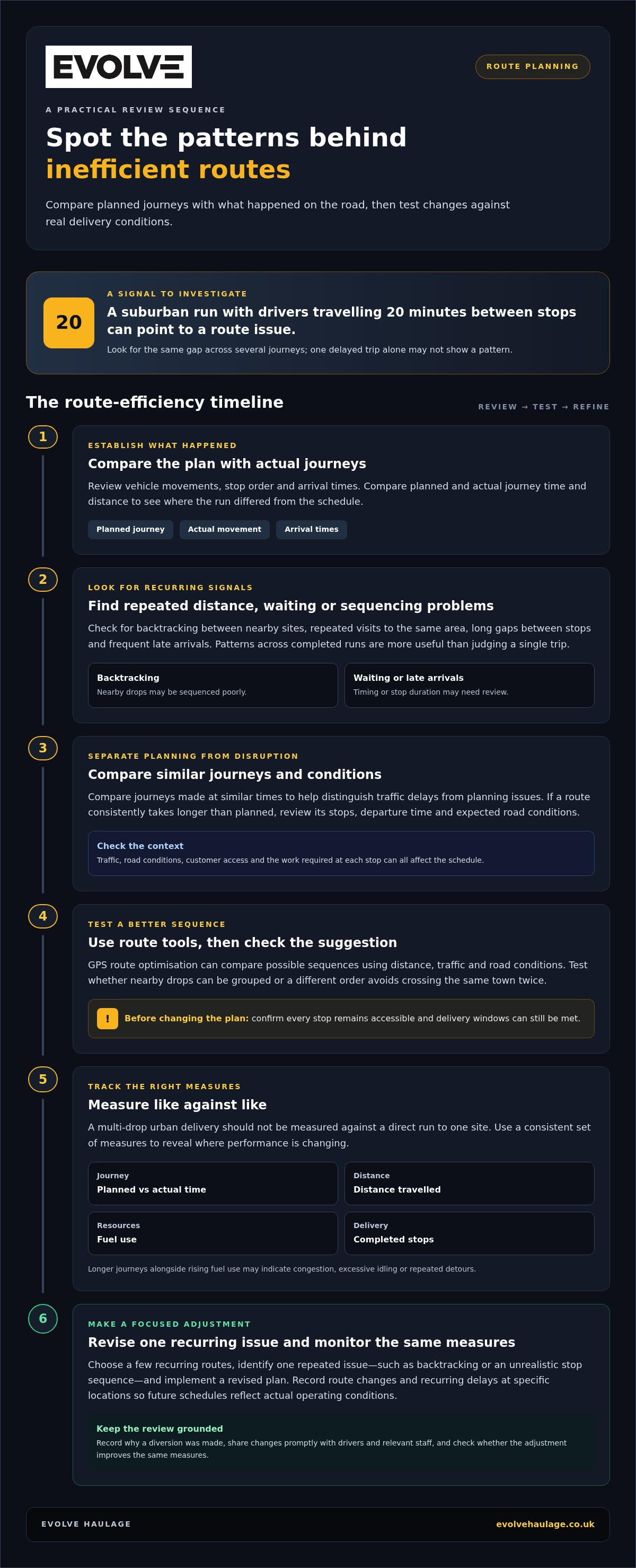
A route can look direct on a map yet waste time during delivery. Compare planned journeys with actual vehicle movements, stop order and arrival times. For example, repeated backtracking between nearby industrial sites may indicate poor sequencing. A suburban route with drivers travelling 20 minutes between stops is another signal to investigate, especially if several journeys show the same gap.
Look for patterns across completed runs rather than judging a single delayed trip. Long gaps between stops, repeated visits to the same area and frequent late arrivals can point to avoidable distance or unsuitable scheduling. Separate traffic delays from planning issues by comparing journeys made at similar times. If a route consistently takes longer than planned, review its stops, departure time and expected road conditions.
GPS route optimisation can help planners compare possible sequences using distance, traffic and road conditions. Use it to test whether nearby drops can be grouped or whether a different order avoids crossing the same town twice. However, review each suggested route in practice: confirm that every stop remains accessible and delivery windows can be met before making the change.
Real-time vehicle tracking adds context when a journey changes unexpectedly. If congestion builds along a planned route, a dispatcher can see which vehicles are affected and assess alternatives. Share route changes promptly with drivers and relevant staff, then record why the adjustment was made. This helps distinguish a useful diversion from a change that simply increases distance or disrupts later deliveries.
Review route performance using clear measures, such as planned versus actual journey time, distance travelled, fuel use and completed stops. Compare like with like: a multi-drop urban delivery should not be measured against a direct run to one site. Rising fuel use alongside longer journeys may indicate congestion, excessive idling or repeated detours. These measures help identify where route planning needs closer attention.
Route optimisation should also account for the work at each stop. Loading and unloading, customer access and the time needed to complete a delivery all affect the schedule. If drivers repeatedly arrive early and wait, or miss later slots after a slow first drop, adjust the sequence and timing. Record recurring delays at specific locations so future plans reflect actual operating conditions.
To improve the process, select a few recurring routes and compare their plans with completed journeys. Identify one repeated issue, such as backtracking or an unrealistic stop sequence, then implement a revised plan and monitor the same measures. This structured review helps businesses improve route efficiency without assuming every delay has the same cause.
3. Route planning around destinations and delivery windows
Group nearby deliveries, choose a practical stop sequence and schedule vehicles around customer time windows. This reduces unnecessary distance and repeat journeys, helping cut fuel consumption and delivery times when traffic and access allow.
Efficiency changes involve trade-offs: a tightly packed route leaves little time for delays, while a longer delivery window can improve load planning. Balance fuel use and journey time against customer urgency, unloading needs and the impact of late arrivals.
Build each route around delivery requirements, not just the postcode list. A retailer may accept deliveries only in the morning, a hospital may require a strict slot, and a home customer may need an evening arrival. Record these constraints before assigning vehicles, then sequence stops around the available windows and the time needed at each site.
Prioritise orders by urgency, geographic proximity or delivery sequence. For example, schedule a time-critical order before flexible drops, then group nearby customers when their delivery windows allow. Leave enough time for loading, unloading and site access. More time between order receipt and delivery can create better opportunities to combine loads and plan routes efficiently.
Destination geography affects how many useful drops a route can include. Several deliveries in one town may form a compact run, while scattered sites can add distance between stops. Map destinations by area and compare the planned sequence with delivery windows. Avoid adding a nearby stop if its timing creates a long wait or disrupts a more urgent delivery.
Plan collections alongside deliveries so vehicles can complete useful work throughout the day. A parcel operation might collect in the morning and deliver in the afternoon, while another schedule may fit a collection between two nearby drops. Assign a vehicle to a specific task when that makes the sequence clearer. Check that added collections do not compromise delivery commitments.
Delivery technology can help organise routes using distance, traffic and weather information. Use tracking updates to identify delays, then promptly tell the driver and affected customers about changes. Confirmation emails, tracking numbers and company contact details give customers a clear way to follow progress. Accurate status messages can reduce uncertainty when an arrival time changes.
Review route plans against actual delivery outcomes. If a driver repeatedly waits at one site, adjust the scheduled arrival or move that stop later. If traffic disrupts a particular corridor, compare alternatives and their effect on nearby deliveries. Record the reason for changes so future plans reflect customer patterns, geography and operating conditions rather than relying on a standard route.
4. Operational efficiency measurement and KPIs
Choose a small set of key performance indicators (KPIs) that link transport activity with business outcomes. Start by recording completed deliveries, journey distance, fuel use and operating costs for comparable routes. For example, compare similar weekday runs serving the same area. This baseline shows whether a new route plan changes performance, rather than relying on impressions from one unusual journey.
Measure distance and fuel together. Fuel used per mile can highlight changes in vehicle use, while fuel per completed delivery can show whether loads and stops are being planned effectively. Pair these measures with on-time delivery performance and journey duration. A shorter trip generally uses less fuel, but a route with fewer miles may still perform poorly if it causes delays or leaves vehicle capacity unused.
Include the full time spent on each job. Record loading, driving, waiting and unloading, since product quantity and weight can affect the time required. For instance, compare a delivery with several heavy items against a direct drop with a light load. This helps distinguish route delays from time spent completing work at a customer’s site, making comparisons between operations more useful.
Controlling operating costs requires a view of both fixed and variable expenses. Track vehicle leases, insurance and depot costs alongside fuel, maintenance and driver hours. Review these categories by vehicle, route or delivery type to identify where expenditure is changing. If fuel costs rise on one route, compare distance, idling and completed drops before changing the vehicle allocation or schedule.
Transport software can bring service schedules, driver behaviour and compliance records into one view. Electronic fuel cards help managers analyse fuel use by vehicle, while telematics can record speed, idling and braking. Use these tools to investigate a specific pattern, such as increased idling on a recurring route, rather than treating every data point as a reason to change a process.
Combine information from dispatch, invoices, maintenance records and delivery reports. A centralised report can show whether rising costs relate to fuel inefficiency, procurement or packaging. Check that each measure uses consistent definitions: for example, note whether journey time includes loading and unloading. Otherwise, one team may compare driving time with another team’s full job duration.
Assess output, production time and labour costs together when reviewing productivity strategies. More completed deliveries may require additional driver hours, so output alone can hide the trade-off. Compare the work completed with the time and resources used, then identify the process causing the biggest gap. This gives managers a practical basis for deciding whether to adjust schedules, maintenance routines or vehicle use. For leaders looking to enhance overall commercial performance beyond day-to-day logistics, MG Affiliate offers business and financial resources designed to strengthen enterprise strategy.
Set a regular review process, assign responsibility for each KPI and record any changes made. After revising a route or service schedule, compare the same measures against its baseline. Keep the review focused: if fuel use improves but late deliveries increase, examine timing and customer requirements rather than simply pursuing lower fuel consumption.
5. Outsourcing transport to third-party logistics providers
Outsourcing can suit businesses whose delivery demand changes or whose fleet capacity struggles to match daily workloads. Working with specialists such as Warenous to find a third-party logistics provider offers access to experienced personnel who can assess suitable vehicles and routes for each job. This can reduce the overhead of managing transport staff and vehicles internally, while giving operations more flexibility during demand peaks.
Start by identifying the transport work causing the greatest pressure. For example, a manufacturer might manage regular deliveries in-house but outsource overflow or time-critical consignments. This keeps familiar routes within the business while adding capacity for work that would otherwise disrupt schedules. Compare the approach with the current fleet plan, including how staff time is used.
Review the full operational effect, not just the vehicle requirement. Consider delivery destinations, load characteristics, customer time windows, collection needs and the level of coordination required. A provider’s logistics expertise can help match vehicles and routes to individual jobs. Clear instructions about access, unloading and delivery priorities help both parties plan consistently.
Agree how performance will be assessed before work begins. Useful measures include completed deliveries, on-time performance, journey time, fuel use and communication about delays. For instance, compare outsourced work with similar in-house journeys, rather than contrasting a multi-stop route with a direct delivery. This gives decision-makers a clearer basis for reviewing service and resource use.
Outsourcing also requires careful coordination. Decide who shares order details, confirms changes and updates customers when a delivery schedule shifts. If dispatch teams use separate systems, agree a practical process for passing accurate information between them. Assigning one person to oversee exceptions can prevent a missed collection or access instruction from causing wider disruption.
Consider the trade-offs. Outsourcing may reduce the need to maintain extra vehicles for occasional peaks, but it also means coordinating work across organisational boundaries. Businesses with predictable routes, suitable fleet capacity and established transport processes may find in-house operations more straightforward. The decision should reflect demand patterns, internal expertise, service priorities and the energy used across each transport option.
For a competitive operation, review the arrangement against the same KPIs used for internal transport. Track service levels and operating costs across comparable work, then use the findings to decide which journeys remain in-house. Transport management works best when responsibilities, delivery information and performance measures are clear to everyone involved.
If you’re assessing outsourced road transport, discuss your transport requirements and how they fit your delivery operations.
Evolve Haulage: Haulage Service
Evolve Haulage provides road haulage for businesses that need transport capacity or support managing day-to-day logistics. Its Transport Management service helps organise transport operations, while its Consultancy Service supports businesses reviewing processes or considering changes to their transport plan.
For time-critical requirements, Evolve Haulage provides 24/7 and same-day delivery solutions across the UK. These services may suit businesses handling urgent consignments alongside regular scheduled deliveries. The right option depends on the work involved, including delivery timing, destination and operational needs.
Share your transport requirements with Evolve Haulage to discuss its haulage, management or consultancy services. Contact Evolve Haulage to start the conversation.
Make your next transport decision count
Use your next planning review to choose one operational issue to address first. It could be recurring delays, uneven demand or the time your team spends coordinating transport. Set a clear measure for the issue, assign responsibility for reviewing it and agree when you’ll assess the result. This creates a practical starting point for deciding how to improve transport efficiency without changing several processes at once.
If your review points towards external support, Evolve Haulage offers haulage, Transport Management and Consultancy services. These can support businesses that need road transport, help managing logistics operations or advice on improving their approach. Consider which requirement is creating the greatest pressure, then outline the routes, delivery needs and operational priorities involved.
A focused discussion can help you identify a suitable next step for your transport requirements. Contact Evolve Haulage today to discuss your needs and move forward with a clearer plan.
Frequently Asked Questions
What does transport efficiency mean and how is it measured?
Transport efficiency means completing required deliveries with effective use of vehicles, time, fuel and staff. Measure it using indicators such as fuel consumed per delivery, vehicle utilisation, empty running, completed jobs per driver shift and delivery reliability. For example, compare fuel per completed consignment across similar work, rather than total fuel alone. Read the measures together: an improvement in utilisation should not obscure increased delays or missed customer commitments.
What are the most effective ways to improve road transport efficiency?
The most effective changes address a clearly identified operational constraint. If dispatch staff spend time correcting incomplete delivery instructions, standardise order information before allocating work. If vehicles return without useful loads, review whether compatible collections can be arranged. Test one change on a defined group of journeys, record its effect on service and resource use, then retain or revise it. This helps prevent a local improvement from creating problems elsewhere.
How can businesses improve vehicle load factors and reduce empty running?
Plan the return journey when the outward delivery is scheduled, rather than treating it as a separate task later. Check whether a collection can be completed near the delivery destination, and whether its timing, cargo requirements and destination suit the vehicle’s next job. Keep dispatch information current so planners can identify suitable work before a vehicle departs. Avoid adding freight that makes the vehicle unsuitable for its next delivery or collection.
What technologies can improve transport efficiency, such as telematics and AI?
Telematics can give fleet managers information about vehicle location and driver behaviour, including idling, braking and speed. Routing software can help compare journey options against traffic and road conditions. AI-based tools can analyse historical journey and order data to suggest planning patterns, but their output needs operational review. For example, check that a suggested sequence respects customer access instructions and cargo requirements before using it in a live schedule.
How much can eco-driving and vehicle maintenance reduce fuel consumption and costs?
The effect depends on driving behaviour, vehicle condition, route profile, traffic and the work being carried. Smooth acceleration, appropriate speeds and less unnecessary idling can reduce avoidable fuel use. A maintenance routine can identify faults that affect vehicle operation and prevent unplanned downtime. Track fuel use alongside mileage and completed work before and after driver coaching or maintenance changes. This comparison shows whether an improvement persists under normal operating conditions.
What are the costs and benefits of switching to electric or low-emission vehicles in the UK?
Assess the whole operating setup, not just the vehicle purchase. Relevant factors include vehicle suitability for the route, payload, daily distance, charging access and time, energy use and maintenance arrangements. Electric or other low-emission vehicles may help reduce tailpipe emissions, while their practical suitability depends on whether they can complete the work and recharge within the schedule. Compare options against actual fleet duties and operating requirements.
What UK transport regulations and policies affect efficiency improvements?
UK transport planning needs to account for vehicle access restrictions, site requirements, road conditions and relevant safety and compliance processes. These factors can influence which vehicles can reach a destination and how a delivery schedule is organised. Before changing a route or vehicle allocation, identify the constraints applying to the journey, cargo and customer site. Keep operational records and staff instructions aligned with those requirements so efficiency changes do not create avoidable compliance or access problems.
How can transport efficiency improvements be measured and compared over time?
Use a consistent baseline and compare like-for-like work across defined review periods. Record factors such as delivery volume, route type, distance, vehicle and working conditions, then calculate measures per delivery or unit of freight. For example, compare fuel per completed job on similar routes rather than contrasting a quiet period with a busy one. Document each operational change and when it began, so managers can distinguish its effect from shifts in demand or work mix.


